Graduate Project Developed in Public Managerial Economics, AU
Dynamic Pricing for the Baconator: Price Discrimination, Consumer Surplus, & Fairness Guardrails
Dynamic Pricing for the Baconator: Price Discrimination, Consumer Surplus, & Fairness Guardrails
Metrics
12-Week Pilot
Recommended pilot structure for testing the pricing model.
20–30 Stores
Suggested a demographically diverse pilot footprint.
10% Peak Cap
Recommended ceiling on price increases.
10–15% Off-Peak Discount
Recommended discount range to shift demand.
3–5% Revenue Trigger
Suggested threshold for continuing the pilot.
Overview
This project examined whether dynamic pricing for Wendy’s Baconator could improve contribution margins and smooth demand without eroding customer trust or creating fairness concerns. The memo approached the issue through managerial economics, focusing on elasticity, price discrimination, consumer surplus, behavioral responses, and implementation guardrails.
What I Analyzed
The project analyzed how time-of-day pricing could affect revenue, customer behavior, and public perception. It drew on concepts from demand and elasticity, second- and third-degree price discrimination, behavioral economics, transparency, and market-failure concerns. The goal was not simply to maximize short-term revenue, but to determine whether pricing could be redesigned in a way that remained understandable and acceptable to consumers.
Economic Logic
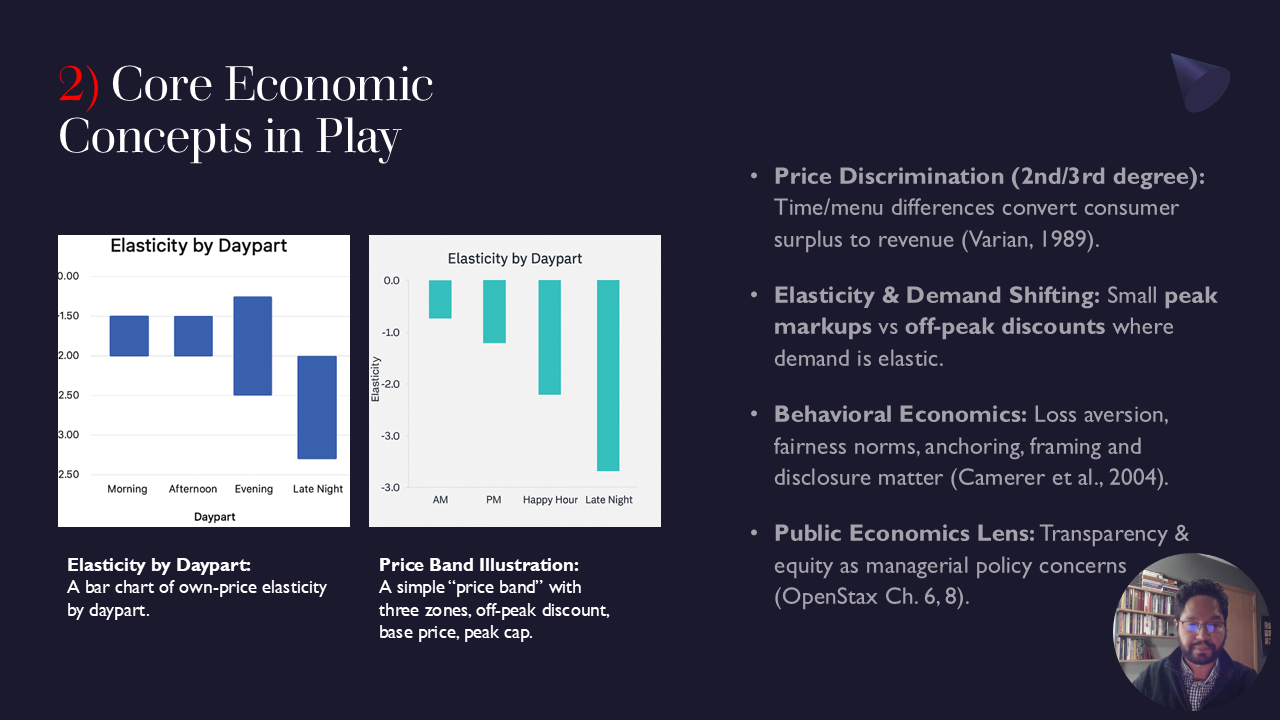
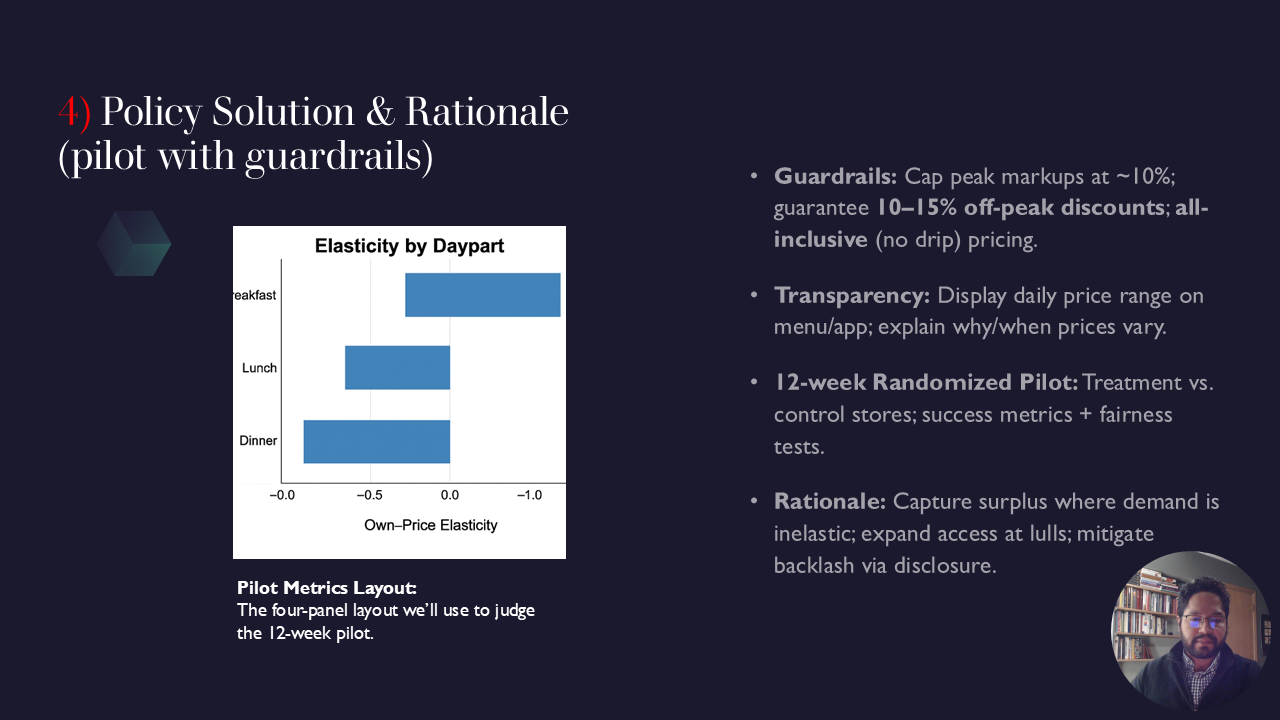
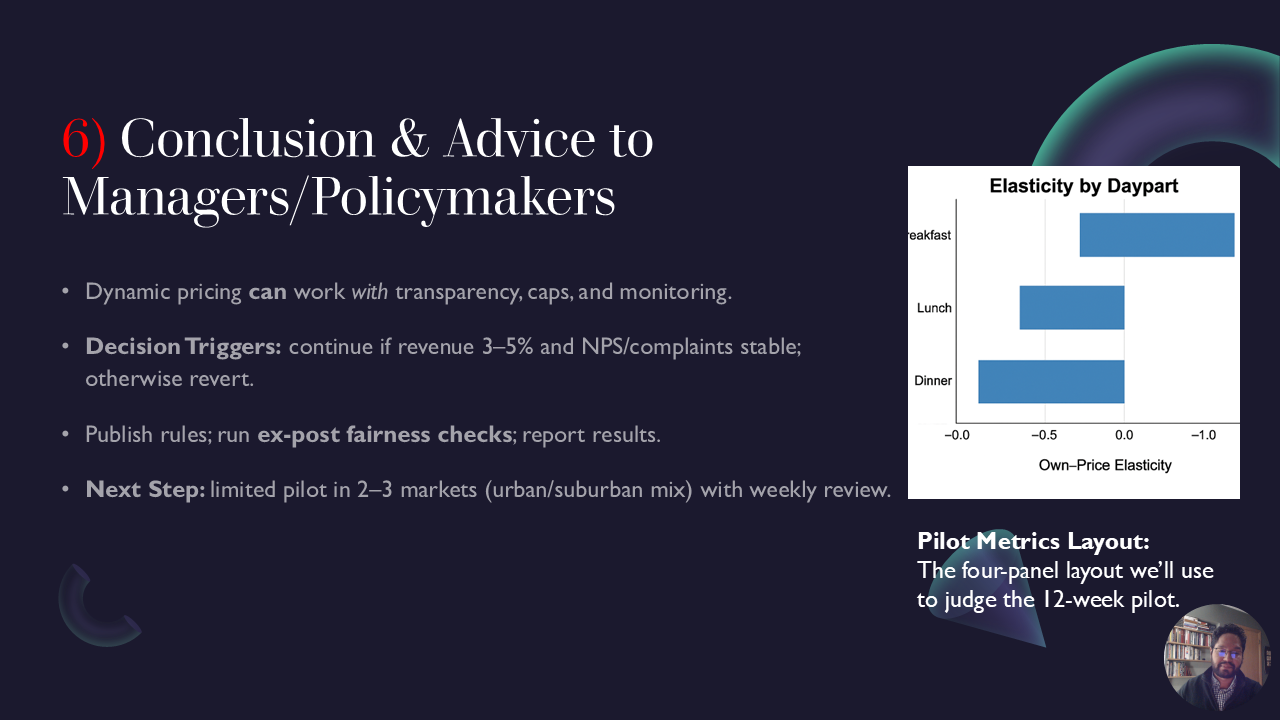
The analysis argued that dynamic pricing can work when peak demand is relatively inelastic and off-peak demand is more elastic. In that setting, modest peak markups can raise revenue while off-peak discounts can shift traffic into slower periods. The project also emphasized that dynamic pricing functions as a form of price discrimination, converting part of consumer surplus into revenue for the firm.
Behavior, Fairness, and Risk
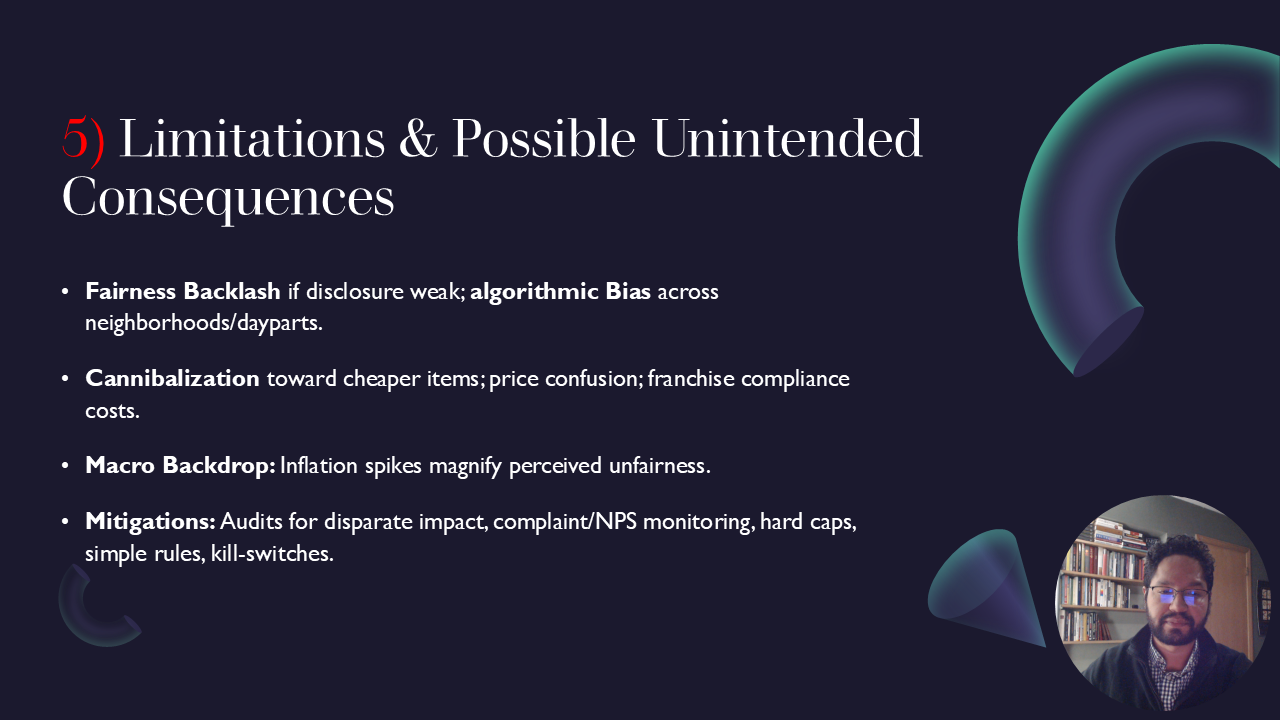
A major contribution of the project was to connect pricing theory to behavioral economics and public trust. The memo argued that uncapped or poorly explained price changes could trigger fairness backlash, especially when consumers interpret them as opaque or manipulative. It highlighted loss aversion, anchoring, and fairness norms as reasons that disclosure, framing, and visible discounts matter just as much as the pricing formula itself.
Recommendation
The recommended option was a guardrailed dynamic-pricing pilot with four main features:
Cap peak price increases at 10%,
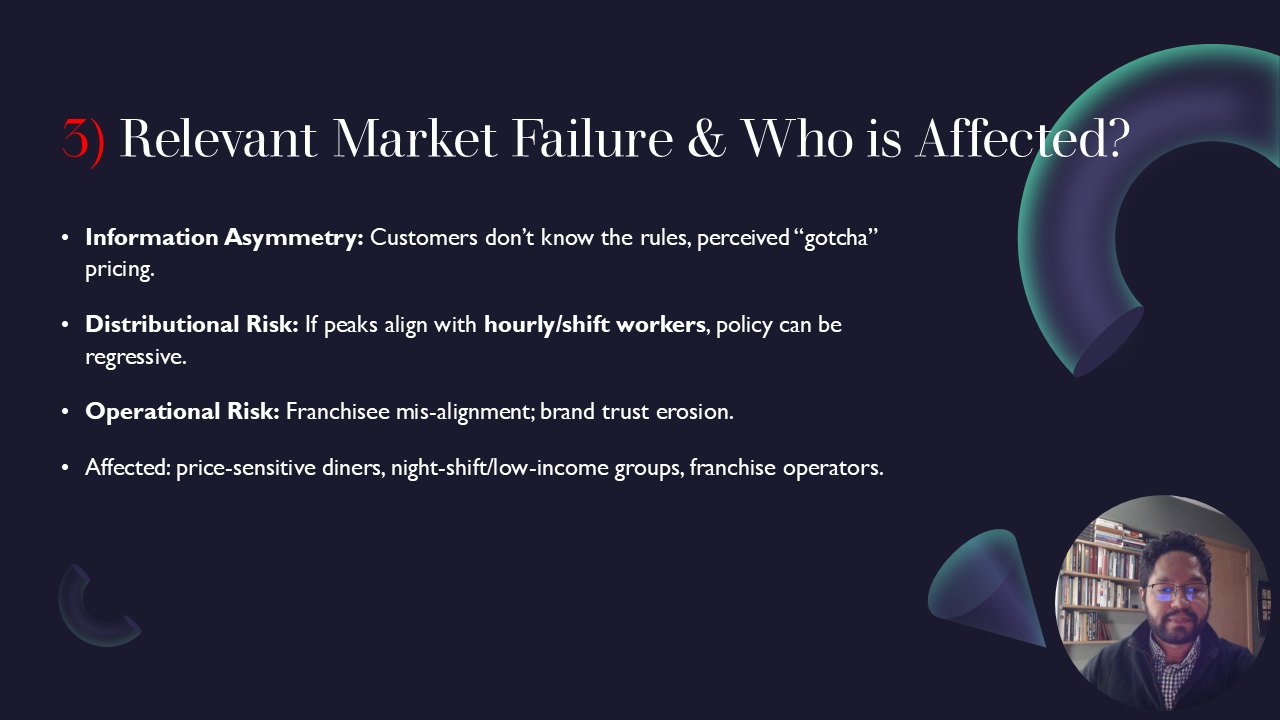
Guarantee off-peak discounts of 10–15%,
Disclose daily price ranges clearly on menus and in the app,
Conduct fairness testing to avoid disparate impact and reputational damage.
Note:This recommendation balanced revenue goals with transparency, consumer trust, and operational simplicity.
Why It Matters?
This project demonstrates the ability to apply microeconomic reasoning to a real managerial decision while also addressing communication, perception, and implementation risk. It reflects skills in pricing analysis, elasticity-based strategy, behavioral framing, pilot design, and performance measurement. It also shows an important professional strength: the ability to analyze market mechanisms without ignoring equity and trust.
Professional Relevance
This work is relevant to program strategy, pricing, operations, product policy, and public-facing management because it shows how economic tools can inform decisions under real-world constraints. It also demonstrates that I can connect technical concepts such as elasticity and price discrimination to broader concerns about fairness, customer response, and implementation governance.
Key Skills
Skills Demonstrated:
Managerial economics
Elasticity analysis
Price discrimination analysis
Behavioral economics application
Pilot design
Performance metrics development
Risk and fairness assessment
Professional memo writing
Personal Reflection
This project reflects my graduate training in public managerial economics and my interest in how pricing, incentives, and behavioral responses shape real managerial choices in both private-facing and public-facing environments.