Graduate Project Developed in Legal Issues in Public Administration, AU:
Analyzed how legal frameworks shape administrative discretion, institutional accountability, and decision-making in public-sector environments, with attention to governance, risk, and implementation.
Constitutional Competence Administrative Decision-Making
Constitutional Law
Rights, accountability, and limits on public action.
Administrative Law
Rulemaking, adjudication, discretion, and procedural requirements.
Public Employee Speech
Balancing institutional efficiency and constitutional protection.
Accountability & Transparency
Oversight, due process, FOIA, and public trust.
Overview
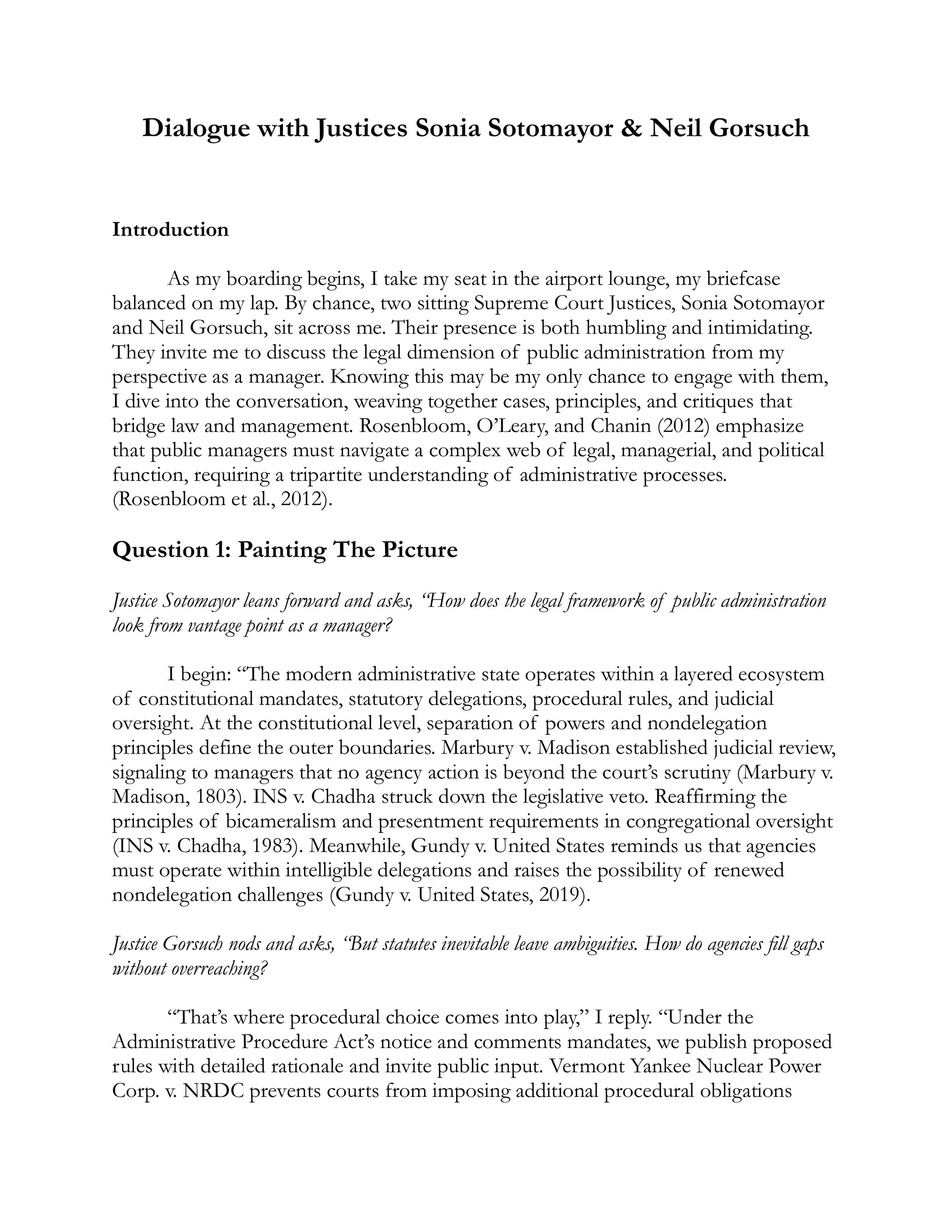
This project examined the legal dimension of public administration from the perspective of a public manager. Rather than treating law as separate from administration, the analysis approached constitutional and administrative law as part of the environment in which public decisions are made, policies are implemented, rights are protected, and institutional legitimacy is maintained.
What I Analyzed
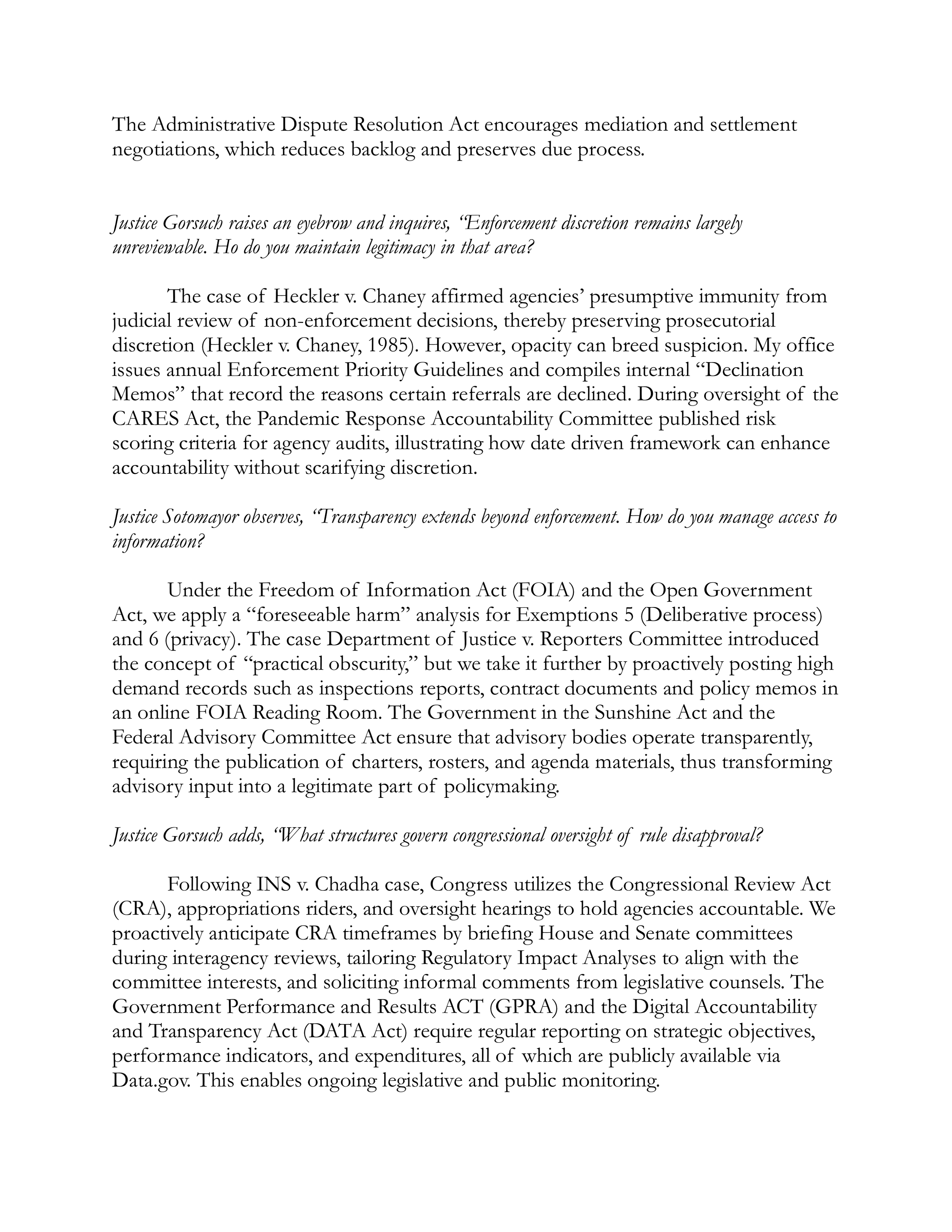
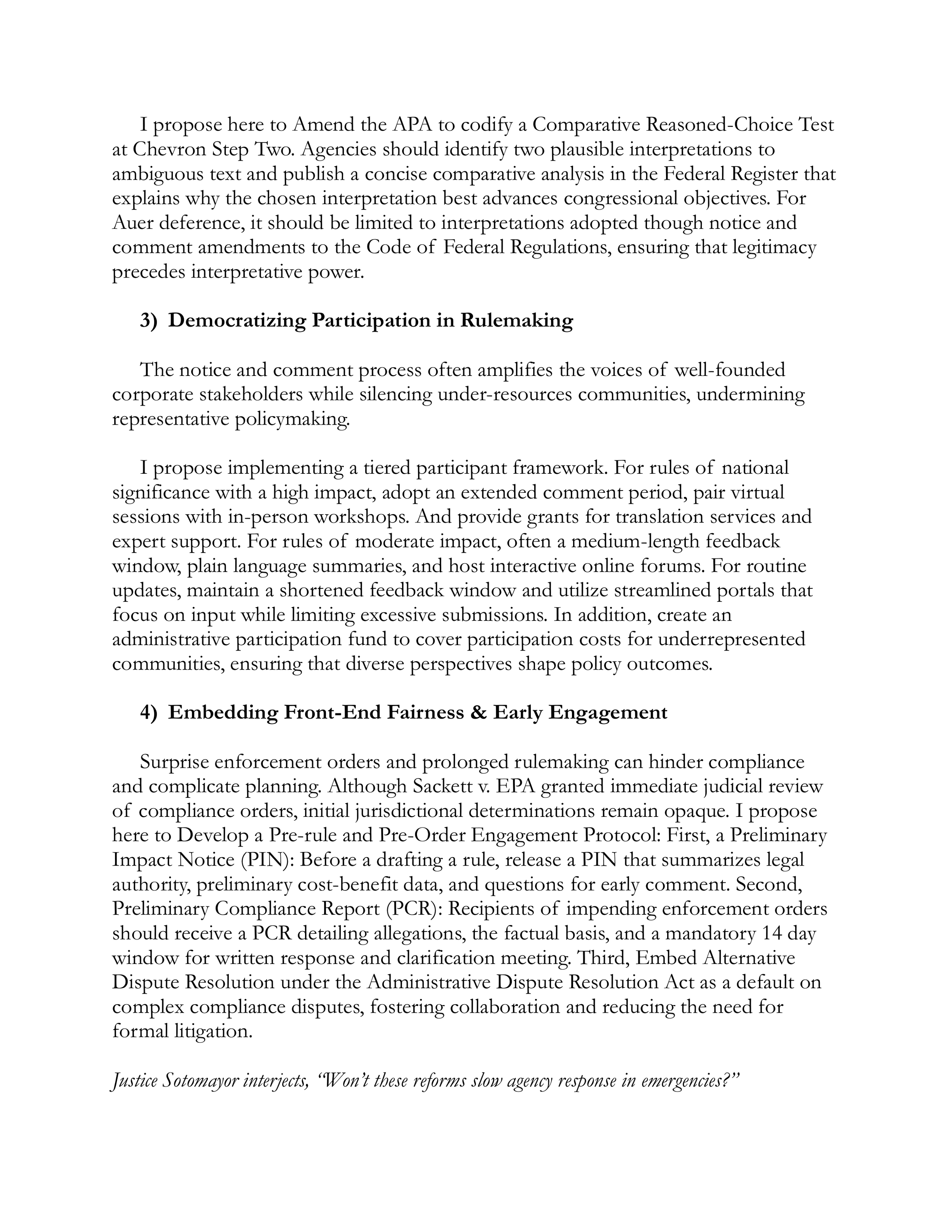
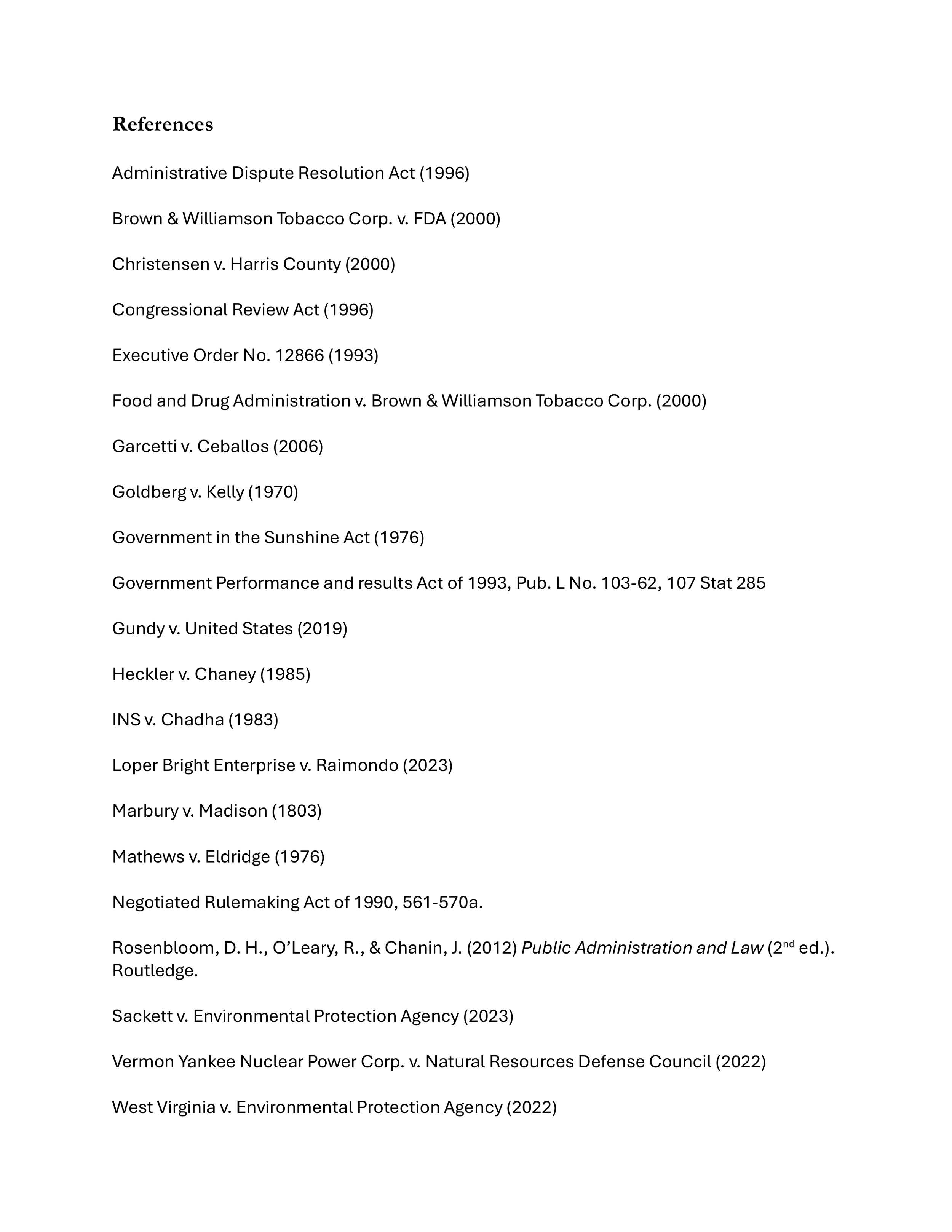
The project explored how public administrators operate within a legal framework shaped by constitutional principles, statutory delegations, procedural rules, and judicial review. My final analysis focused on how managers must navigate separation of powers, agency discretion, rulemaking, adjudication, transparency, enforcement priorities, and public accountability while still carrying out institutional missions effectively.
Key Legal & Administrative Questions
A major strength of this project is that it moves beyond abstract doctrine and asks applied questions relevant to public management:
How much discretion should agencies have when statutes are ambiguous?
How should public institutions balance efficiency with due process and transparency?
What legal protections should exist for internal dissent, whistleblowing, and public employee speech?
How should participation, fairness, and accountability be strengthened in rulemaking and enforcement?
Administrative Judgment & Public Risk
The course materials emphasize that public administrators need constitutional competence not simply to avoid legal error, but because legal knowledge is part of competent public service itself. The course's welcome explicitly frames constitutional competence as a job requirement and explains that managers must understand when law empowers action, when it constrains action, and when legal consultation is necessary before proceeding. That framing gave this project a practical rather than purely academic orientation.
Public Employee Speech, Accountability, and Whistleblowing
Your midterm provides one of the strongest applied dimensions of this mini-case. There, you contrasted Pickering v. Board of Education as a case that appropriately balanced employee speech and institutional efficiency with Garcetti v. Ceballos as a decision that weakened protections for duty-related speech and chilled internal accountability. That analysis strengthens the website narrative because it shows you engaging legal doctrine not only descriptively, but critically, with attention to managerial consequences and democratic values.
Why This Project Matters?
This project demonstrates the ability to interpret legal frameworks through the lens of public administration rather than through a purely legal or doctrinal lens. It shows how you think about governance, discretion, compliance, due process, transparency, and institutional risk as interconnected dimensions of administrative decision-making. It also reflects a broader professional strength: translating complex systems into clear, decision-oriented analysis.
Professional Relevance
In professional settings, important decisions are rarely only strategic or operational. They are also legal-administrative. This project shows your ability to recognize that intersection and to analyze how authority, procedure, documentation, accountability, and public values shape real institutional choices. That makes it especially relevant to work in government, nonprofits, policy environments, public-facing institutions, and mission-driven organizations.
Key Contributions
Skills Demonstrated:
Legal-administrative reasoning
Governance and accountability analysis
Public employee speech and rights analysis
Administrative discretion and risk assessment
Rulemaking and due process awareness
Professional analytical writing
Institutional judgment in public-sector settings
Personal Reflection
This project reflects my graduate training in public administration and my interest in how public institutions make legally grounded, accountable, and effective decisions in complex environments.