Graduate Projects Developed in Introduction to Public Administration / Policy Process, AU:
(1). Federalism & Emergency Management: Lessons from Hurricane Katrina
(2). Post-Pandemic Infectious Disease Management Office
Federalism & Emergency Management
Metrics
3 Levels of Government
Federal, state, and local responsibilities were central to the analysis.
2 Federalism Dimensions
The memo distinguishes both vertical and horizontal federal dynamics.
3 Fiscal Mechanisms
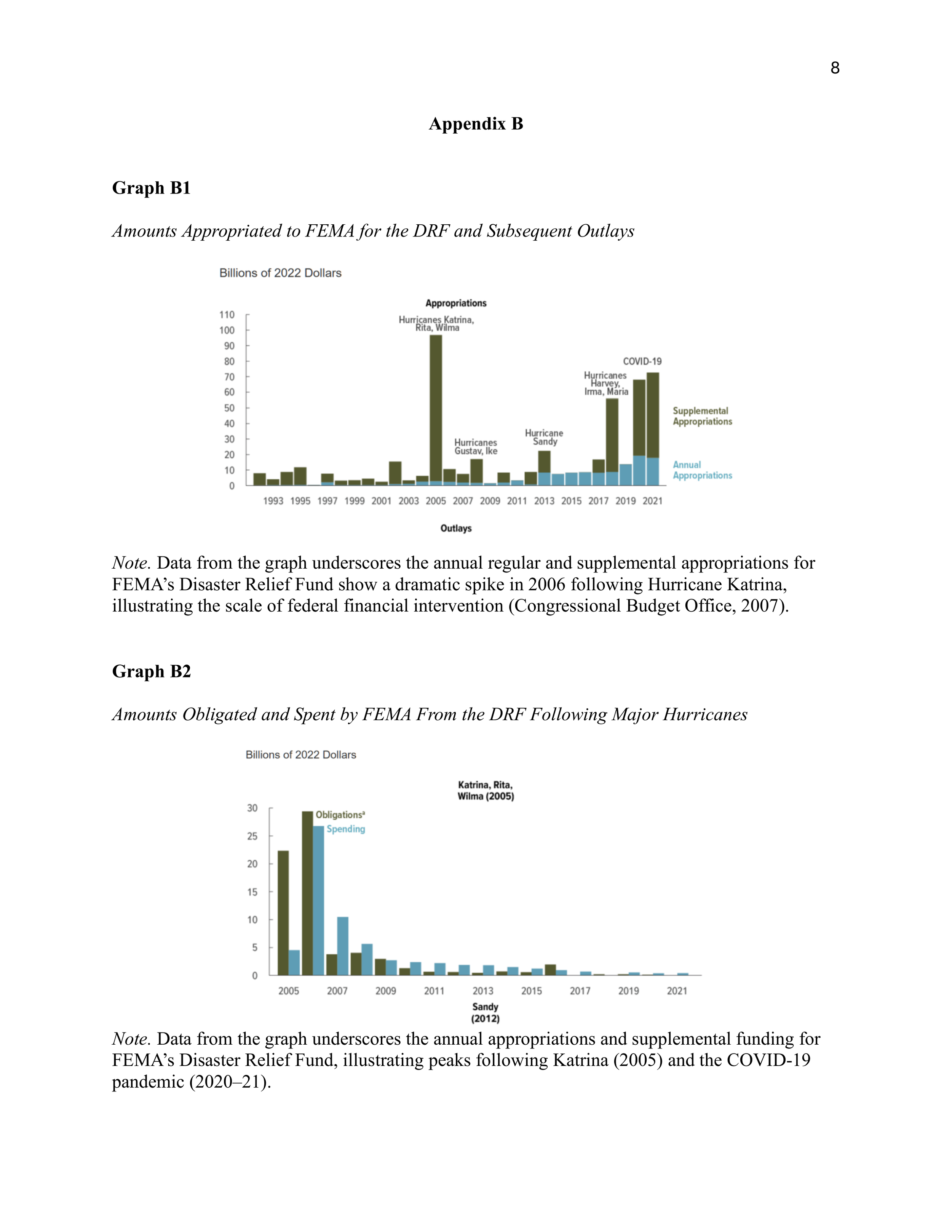
Federal grants, cost-sharing, and special appropriations/loan programs were examined.
Practitioner-Based Insight
The brief incorporates practitioner interviews alongside academic sources.
Public Administration Lens
The memo connects emergency-management failures to leadership, accountability, and managerial design.
Overview
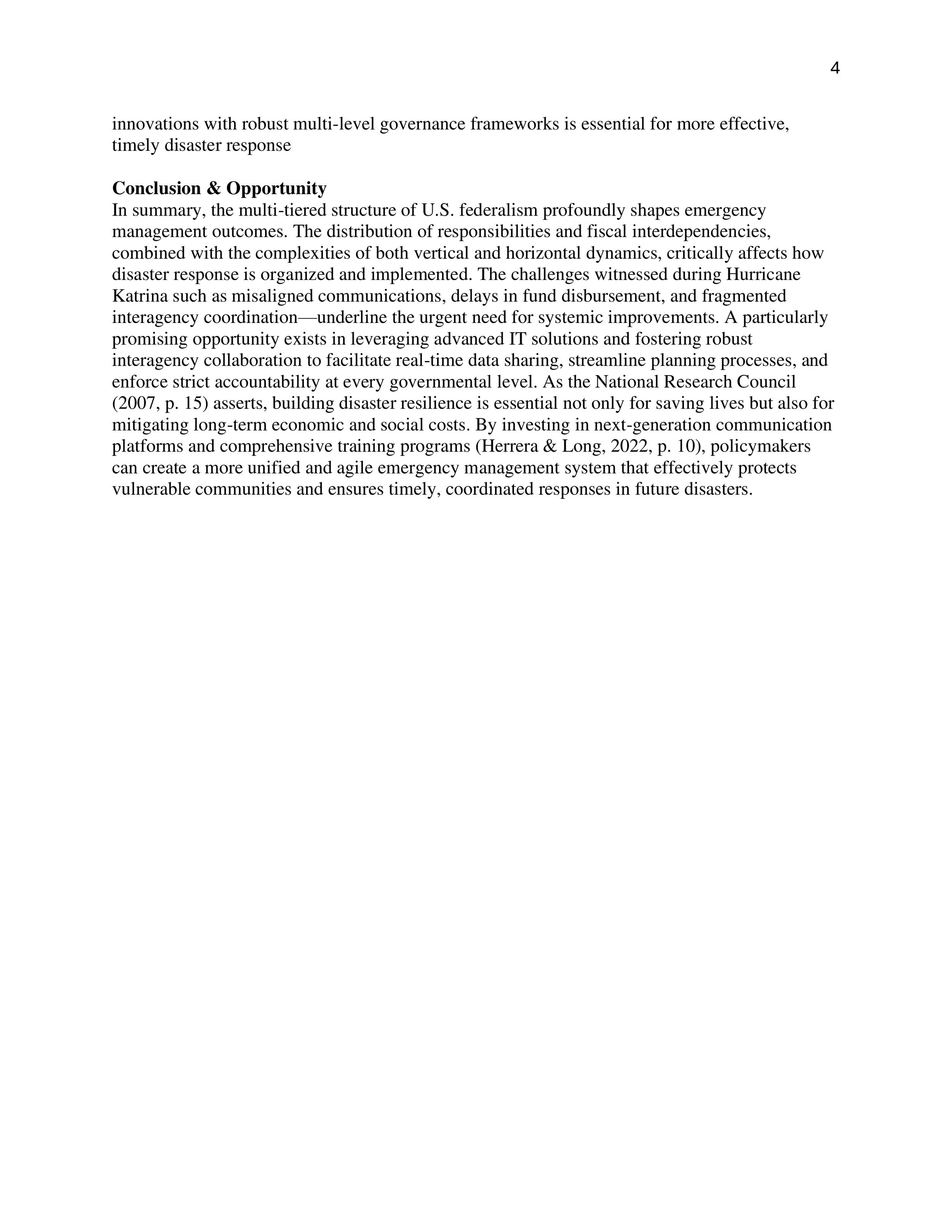
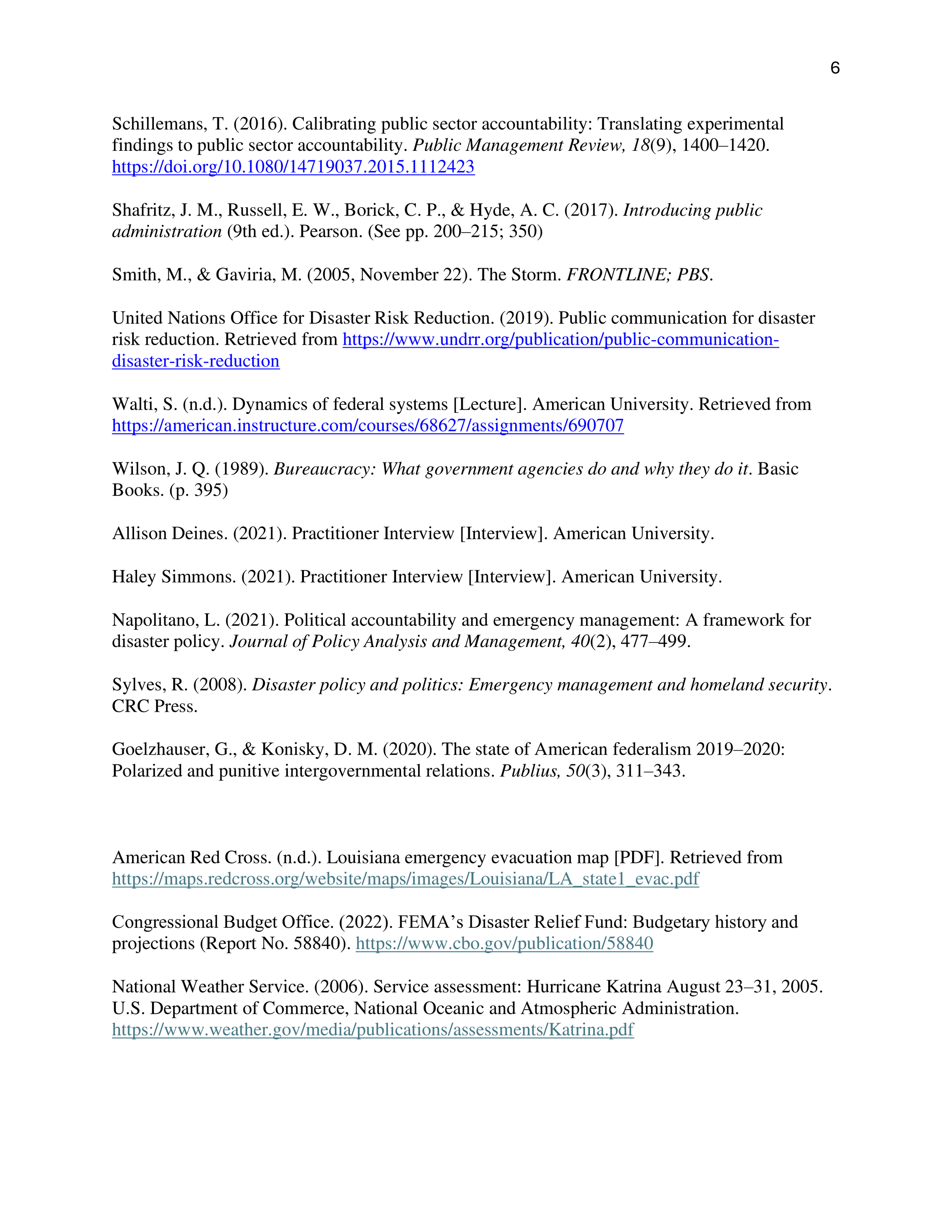
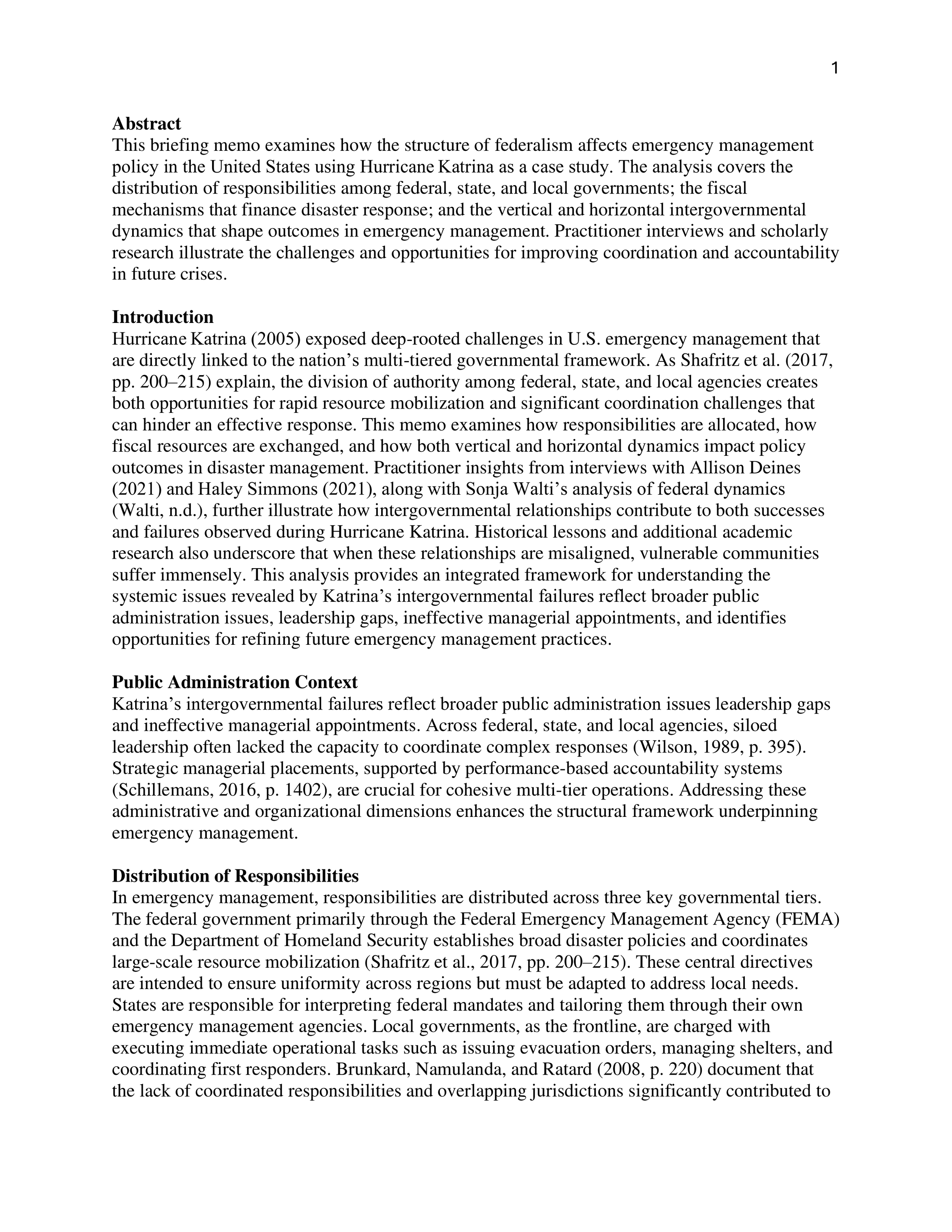
This project analyzed the impact of federalism on emergency-management policy in the United States, using Hurricane Katrina as a case study. The memo focused on how responsibilities were divided among federal, state, and local authorities, how fiscal resources flowed across levels of government, and how intergovernmental dynamics shaped disaster-response outcomes.
What I Analyzed
The analysis was organized around four major questions:
How are emergency-management responsibilities distributed across federal, state, and local governments?
How do fiscal-federal mechanisms affect the timing and adequacy of disaster response?
How do vertical relationships among levels of government shape implementation?
How do horizontal relationships among states affect policy sharing, competition, and regional effectiveness?
This structure allowed the project to move beyond a simple disaster narrative and into a broader analysis of public administration and governance.
Key Diagnosis
The memo concluded that the failures surrounding Katrina reflected more than an operational breakdown. They exposed deeper public administration problems: Unclear responsibilities, weak coordination across jurisdictions, delays in fiscal flows, fragmented communication, and leadership gaps across multiple levels of government. The project argues that these failures were not isolated, but reflected systemic weaknesses in the intergovernmental framework itself.
Federalism & Public Administration
A major strength of the project is that it interprets federalism not only as a constitutional structure, but as a managerial reality. The memo shows how emergency management depends on the interaction of:
Federal coordination and resource mobilization,
State adaptation of national guidance,
and local execution of life-safety tasks such as evacuation, sheltering, and immediate response.
Note: It also highlights how vertical misalignment and horizontal competition can undermine the speed and coherence of emergency response.
Why It Matters
This project demonstrates the ability to connect public administration theory to a concrete crisis. It reflects skills in governance analysis, federalism, fiscal relations, accountability, crisis management, and institutional diagnosis. It also shows an important professional strength: the ability to analyze how structure, leadership, and intergovernmental design affect real public outcomes, especially for vulnerable populations.
Professional Relevance
This work is directly relevant to government, policy, emergency management, public-service leadership, and intergovernmental affairs because it shows how administrative systems succeed or fail under stress. It demonstrates the ability to interpret a major public crisis through the lens of governance design, accountability, coordination, and implementation.
Key skills
Skills Demonstrated
Intergovernmental analysis
Federalism and governance
Emergency-management policy analysis
Fiscal federalism interpretation
Public accountability assessment
Crisis-management reasoning
Professional briefing memo writing
Personal Reflection
This project reflects my graduate training in public administration and my broader interest in how intergovernmental systems, institutional design, and accountability structures shape public outcomes during complex crises.
Post-Pandemic Infectious Disease Management Office
Metrics
3 Core Units
Data & Analytics, Audit & Evaluation, Learning & Adaptation.
3 Learning Levels
Single-loop, double-loop, and triple-loop learning.
4 Audit Layers
Compliance, performance, internal, and summative/meta-evaluation.
Cross-Sector Scope
Health, emergency management, education, social services, and community coalitions.
City-Level Design
Structured for the City of Chicago and the Office of the City Manager.
Overview
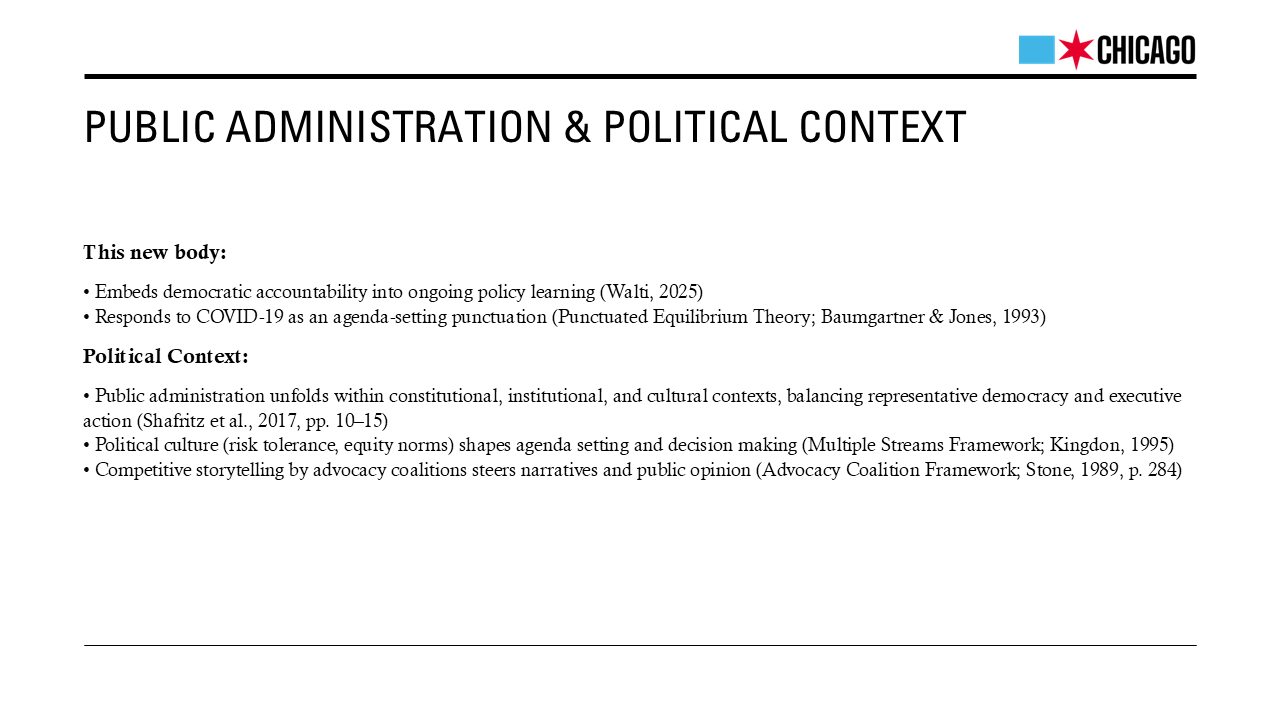
This project proposed the creation of a New Post-Pandemic Infectious Disease Management Office for the City of Chicago. The idea was to move beyond episodic crisis response and instead institutionalize continuous monitoring, evaluation, auditing, and policy learning so that the city could respond more effectively to future infectious-disease threats.
What I Designed
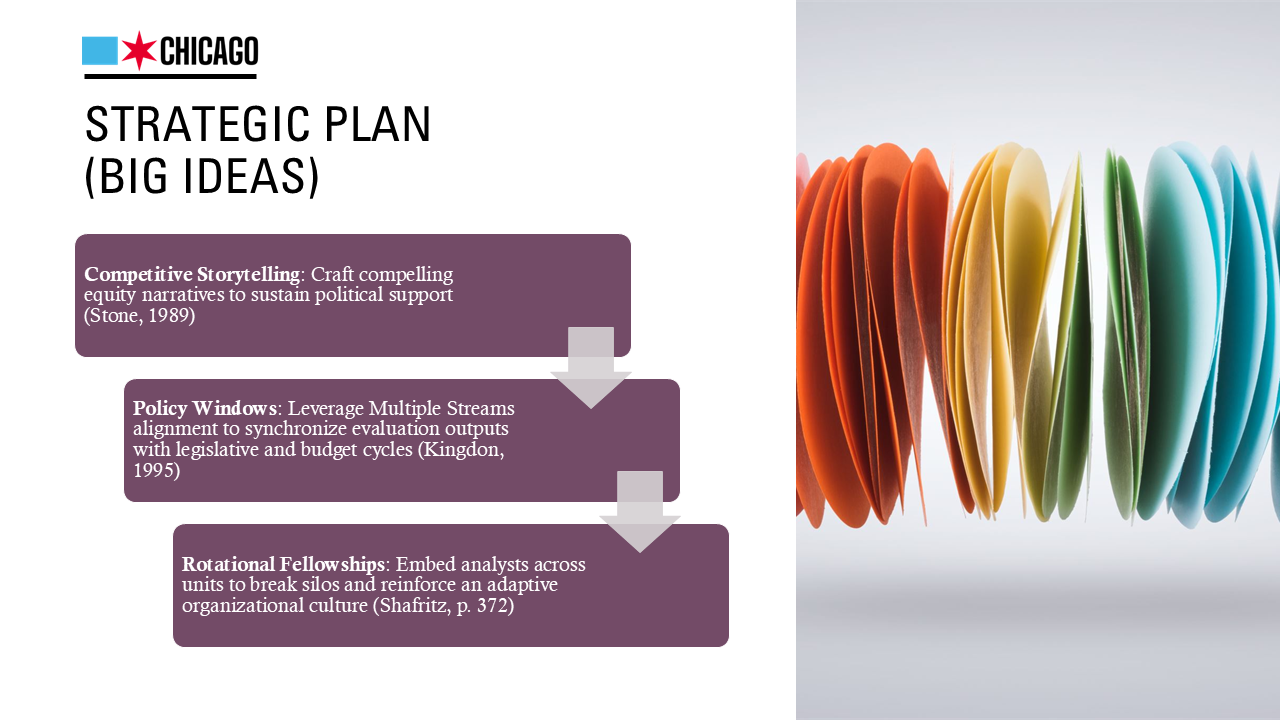
The project outlined the office’s purpose, structure, mission, strategic plan, and control system. It proposed a city-level body responsible for:
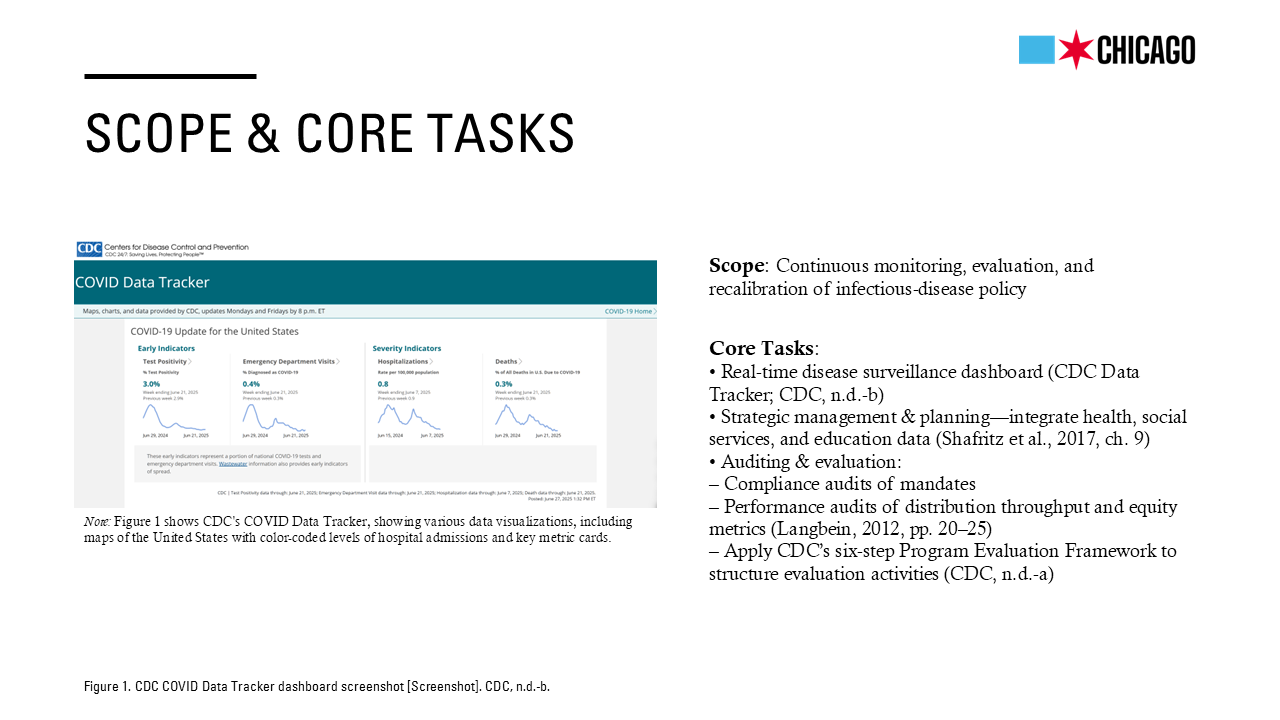
Real-time disease surveillance,
Strategic planning across agencies,
Compliance and performance auditing,
Annual evaluation and cost-effectiveness review,
Meta-evaluation of the city’s own learning processes.
The design positioned the office not as a temporary COVID-era response unit, but as a permanent governance mechanism for public-health resilience.
Organizational Design
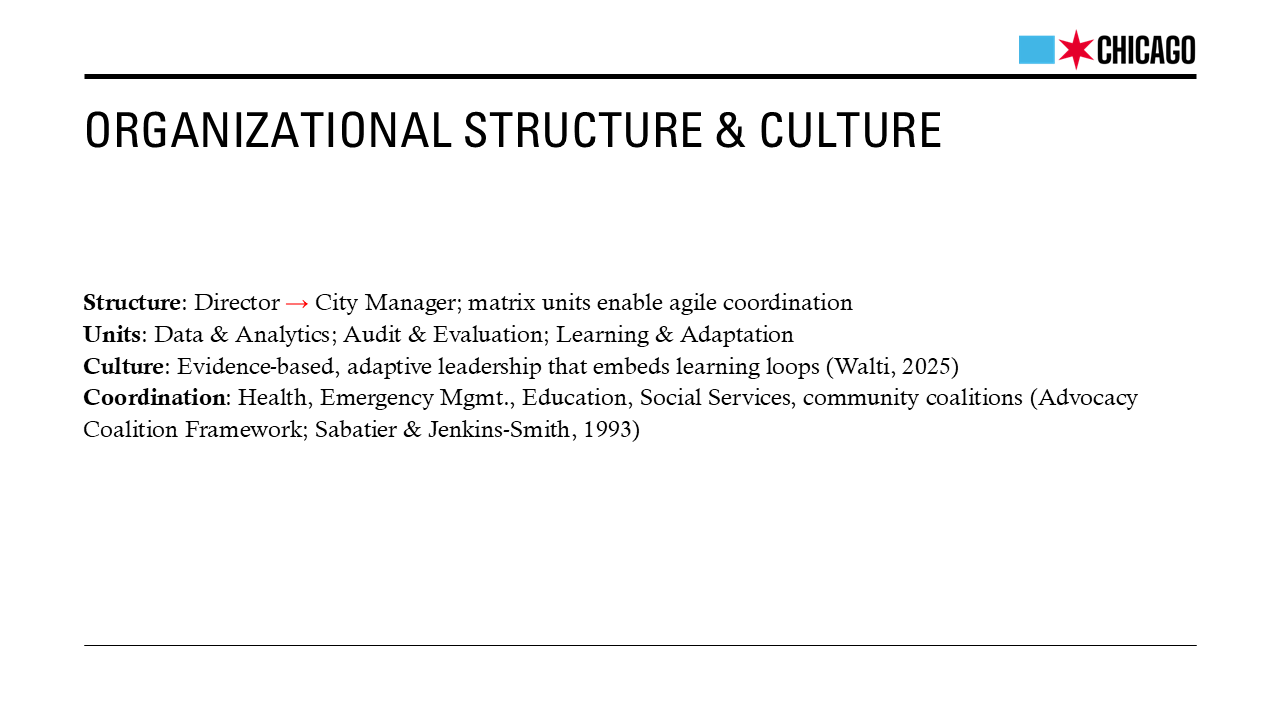
A major strength of the project is its emphasis on administrative design. The office was structured with a direct reporting line to the City Manager and a matrix of three units:
Data & Analytics
Audit & Evaluation
Learning & Adaptation
This structure was meant to support agility, cross-functional coordination, and evidence-based decision-making rather than siloed crisis management.
Policy Learning & Adaptive Governance
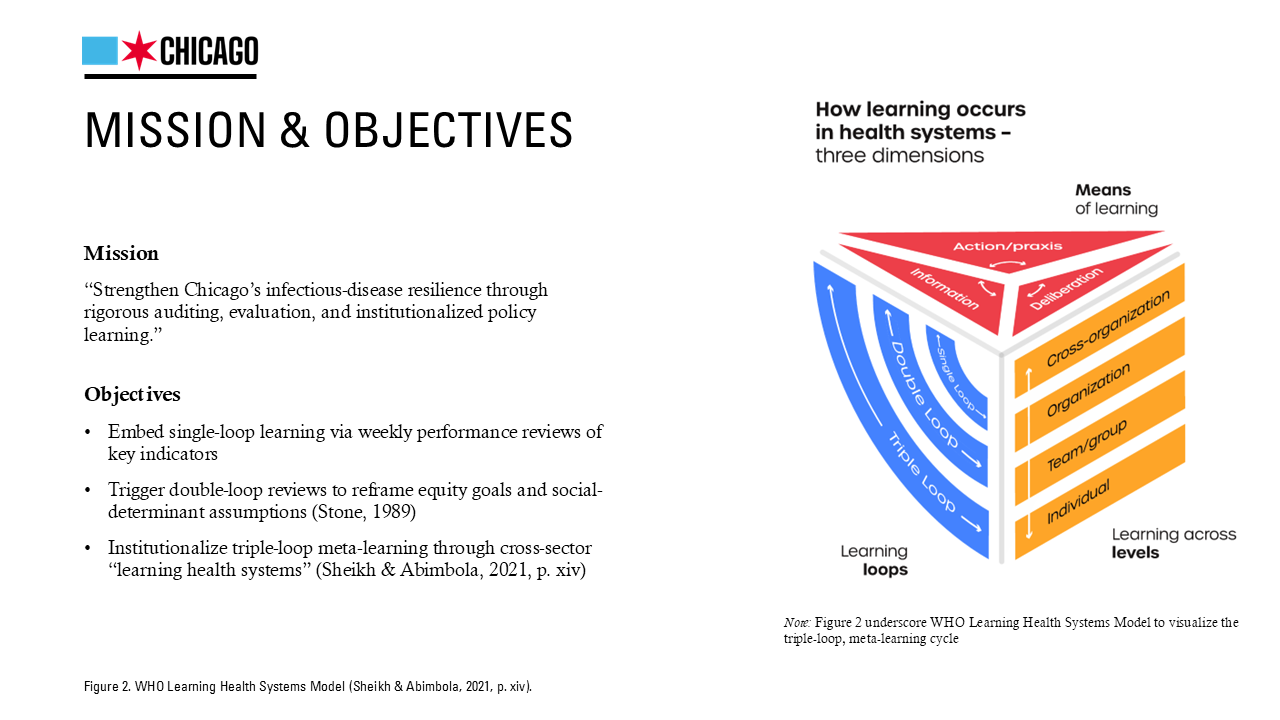
The proposal centered on the idea that public-health governance should be a learning system. It explicitly incorporated:
Single-Loop Learning through regular performance reviews,
Double-Loop Learning to challenge assumptions about equity and policy design,
and Triple-Loop Learning to strengthen the organization's learning across sectors over time.
This makes the project especially strong because it moves beyond “what should government do?” to “how should government learn?”
Auditing, Evaluation, & Accountability
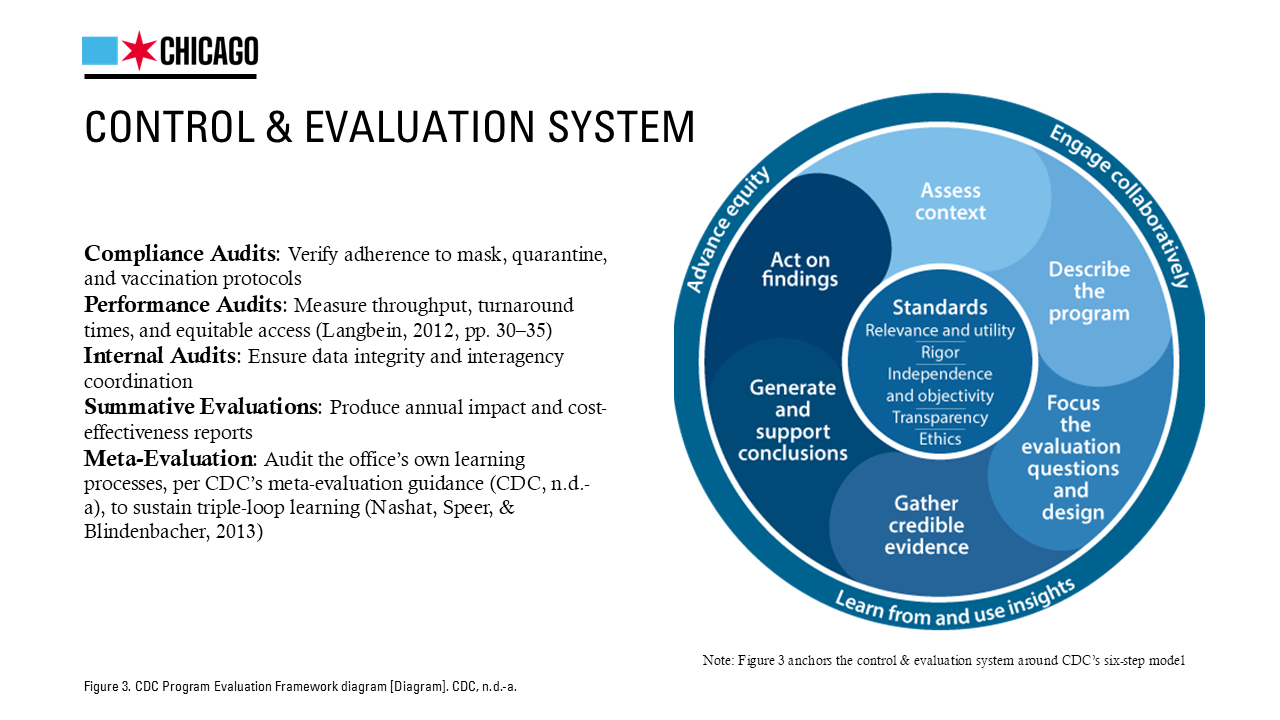
The project also proposed a layered control system built around:
Compliance audits,
Performance audits,
Internal audits,
Summative evaluations,
Meta-evaluation.
This framework shows a strong public-administration orientation: accountability was treated not as an afterthought, but as a built-in design principle tied to democratic legitimacy and institutional trust.
Why It Matters
This project demonstrates the ability to design a public institution, not only to analyze one. It reflects skills in organizational design, strategic planning, evaluation systems, adaptive governance, cross-sector coordination, and accountability-focused thinking. It also shows a clear strength in translating theory into a practical administrative proposal.
Professional Relevance
This work is directly relevant to public administration, public health governance, city management, strategy, and cross-sector coordination. It demonstrates the ability to think institutionally: how to structure an office, define its mission, design feedback systems, and build learning and accountability into the organization from the outset.
Key skills
Skills Demonstrated:
Organizational design
Strategic planning
Audit and evaluation design
Adaptive governance
Cross-sector coordination
Public-health administration
Institutional accountability
Professional presentation and policy communication
Personal Reflection
This project reflects my graduate training in public administration and my interest in how public institutions can become more adaptive, accountable, and resilient in the face of complex health and governance challenges.