Graduate Project Developed in Quantitative Methods, AU:
Nursing Home Quality & Medicaid Access: Evidence for CMS Grant Funding
Nursing Home Quality & Medicaid Access
Using quantitative analysis to evaluate whether governmental nursing homes should receive CMS grant funding based on Quality of Care, and Medicaid access outcomes.
Metrics
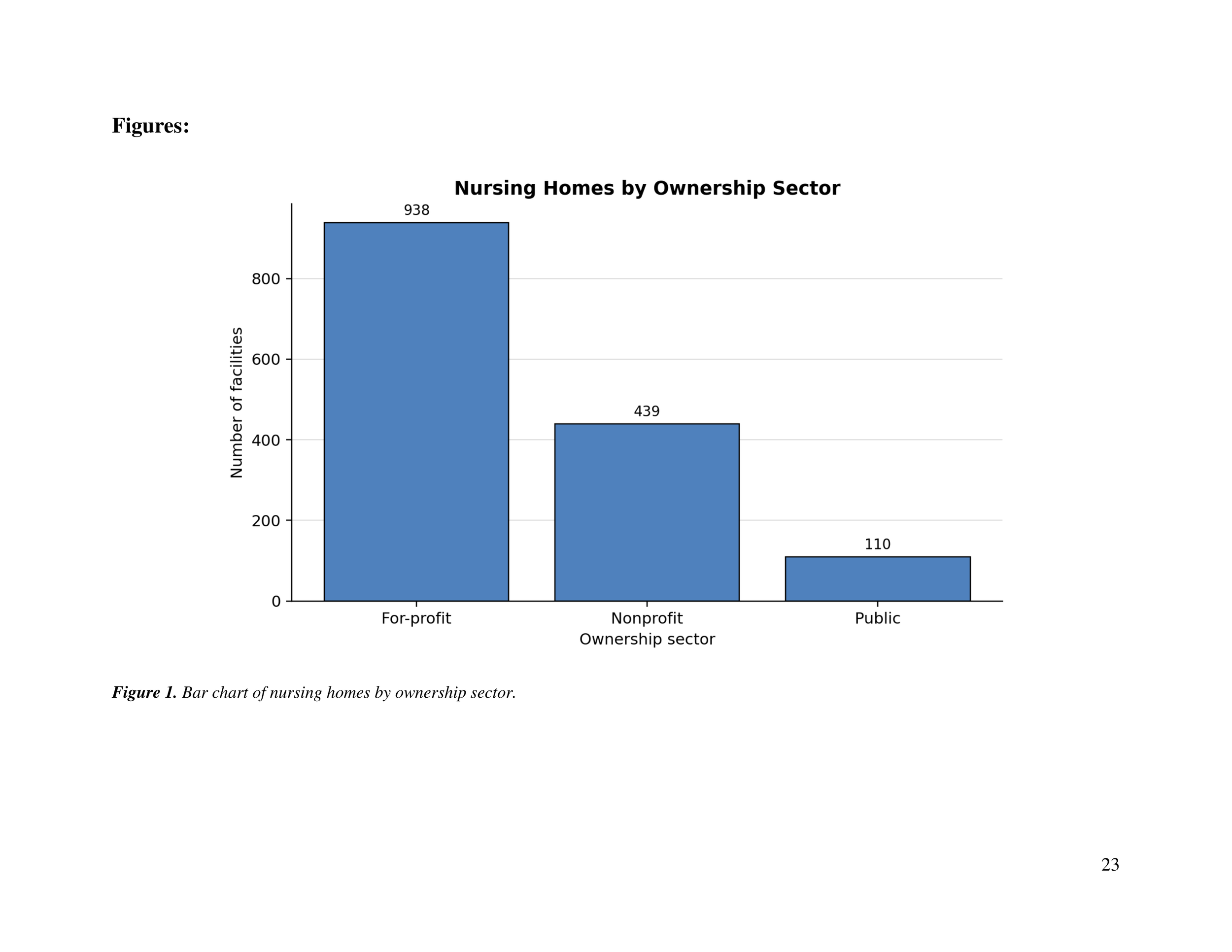
1,487 Nursing Homes:
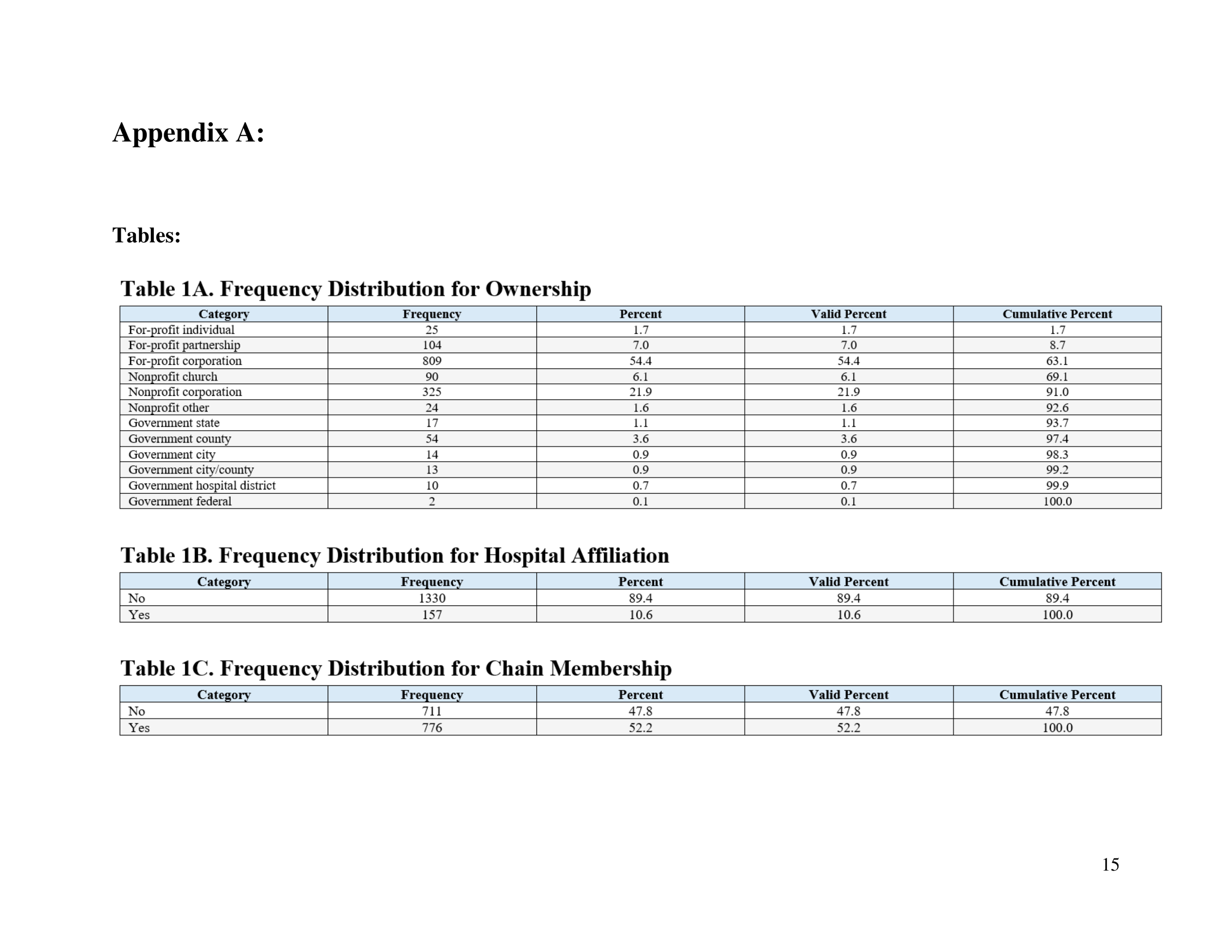
National stratified random sample from Nursing Home Compare 2019.
33 Variables:
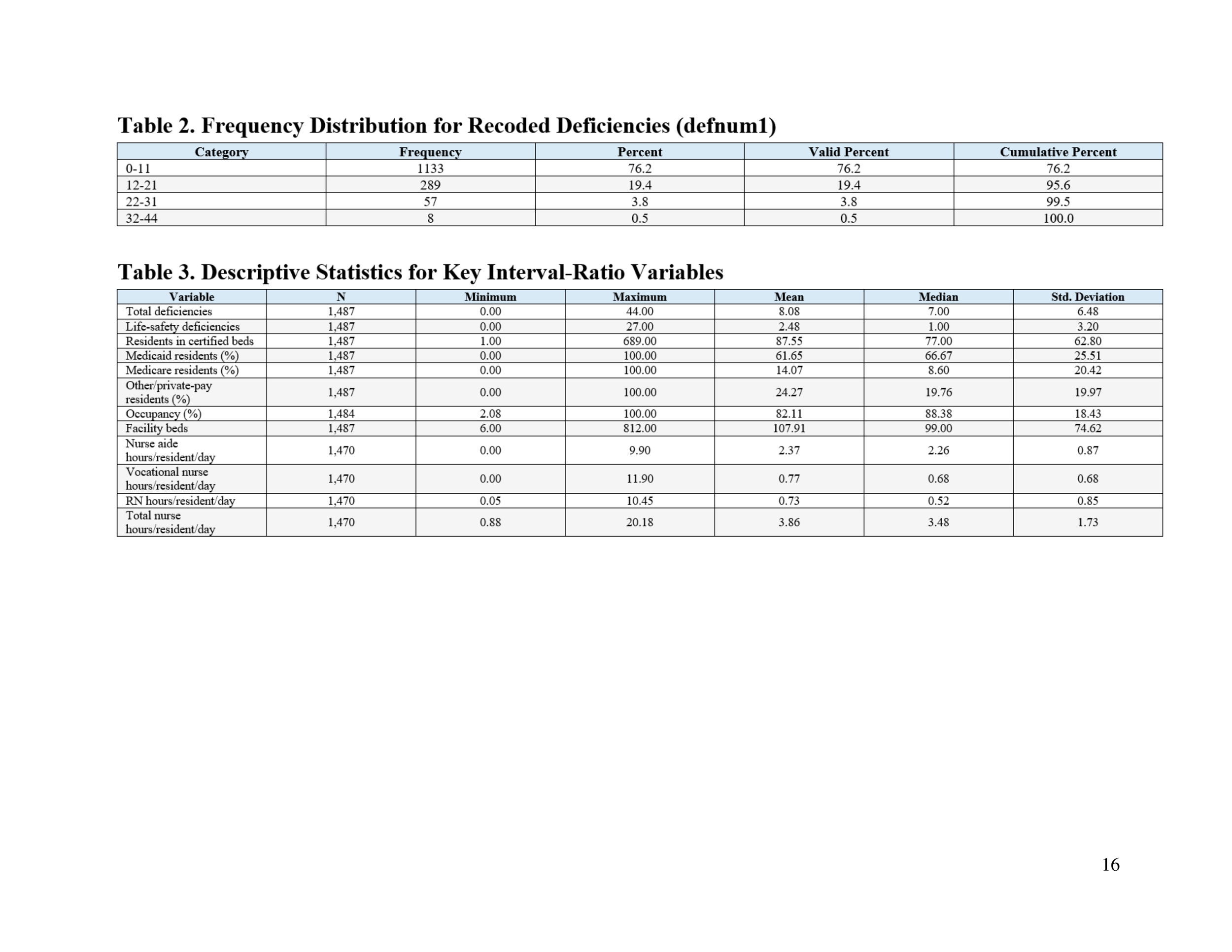
Ownership, deficiencies, payer mix, staffing, occupancy, hospital affiliation, and chain membership.
3 Ownership Sectors:
For-profit, nonprofit, and public/governmental homes.
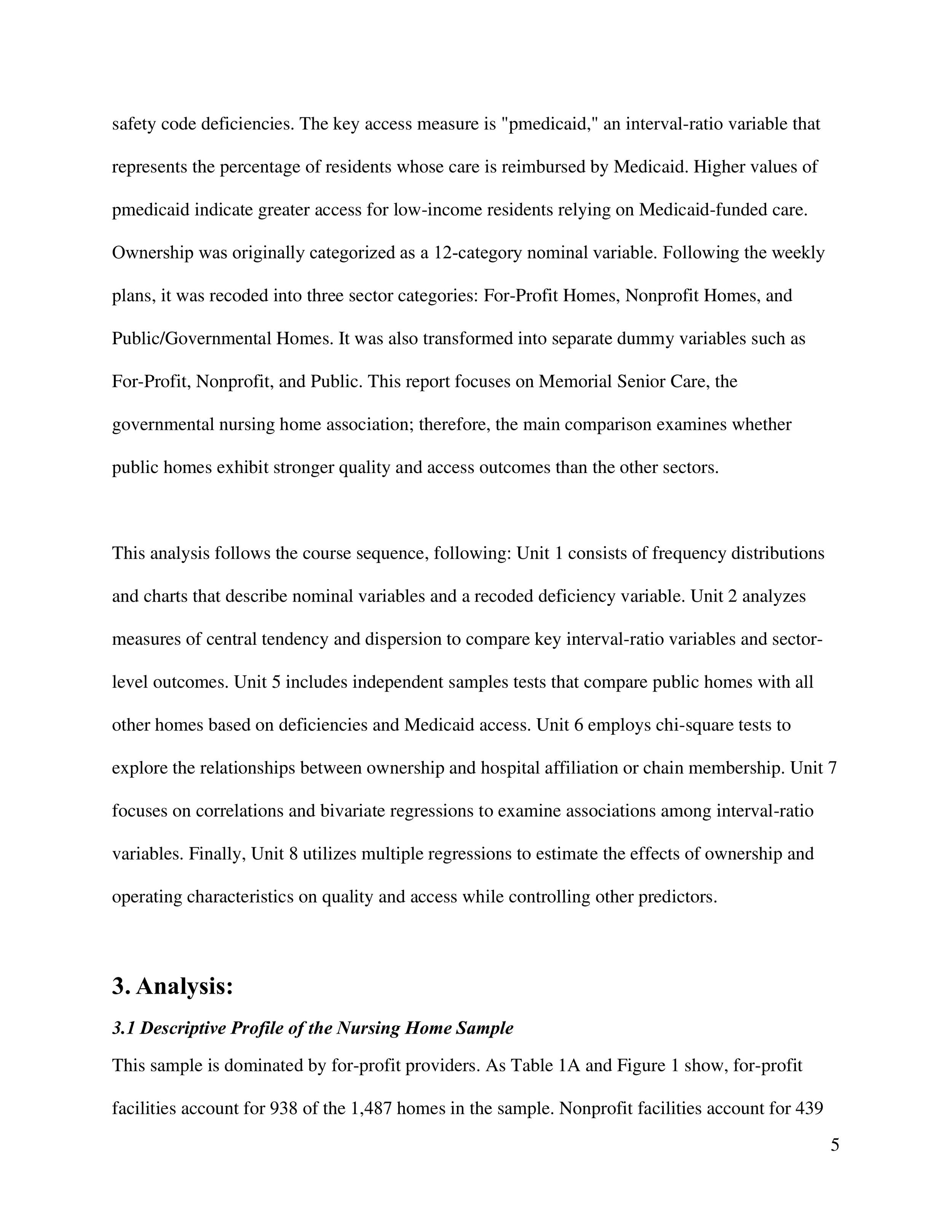
6.57 Mean Deficiencies:
Public homes had the lowest average number of total deficiencies across ownership sectors.
Final Recommendation:
Award CMS grant funding to Memorial Senior Care, representing governmental nursing homes.
Overview
This project evaluated whether governmental nursing homes, represented by Memorial Senior Care, should receive CMS grant funding to support renovations, innovative technologies, and assistive devices. The analysis used the Nursing Home Compare 2019 dataset to compare governmental, nonprofit, and for-profit nursing homes on two public-management outcomes: quality of care and access to care for Medicaid-funded residents.
Research Question
The central question was whether governmental nursing homes perform better than nonprofit and for-profit facilities in balancing two outcomes that matter for public value:
Quality of Care: Measured by the total number of regulatory deficiencies found during inspection.
Access to Care: Measured by the percentage of residents whose care is reimbursed by Medicaid.
This framing matters because a facility sector may appear strong on quality while serving fewer Medicaid residents, or it may provide broad access while facing quality challenges.
Methods
This report used a full sequence of quantitative methods developed across the course:
Frequency distributions and charts,
Measures of central tendency and dispersion,
Two-sample hypothesis tests,
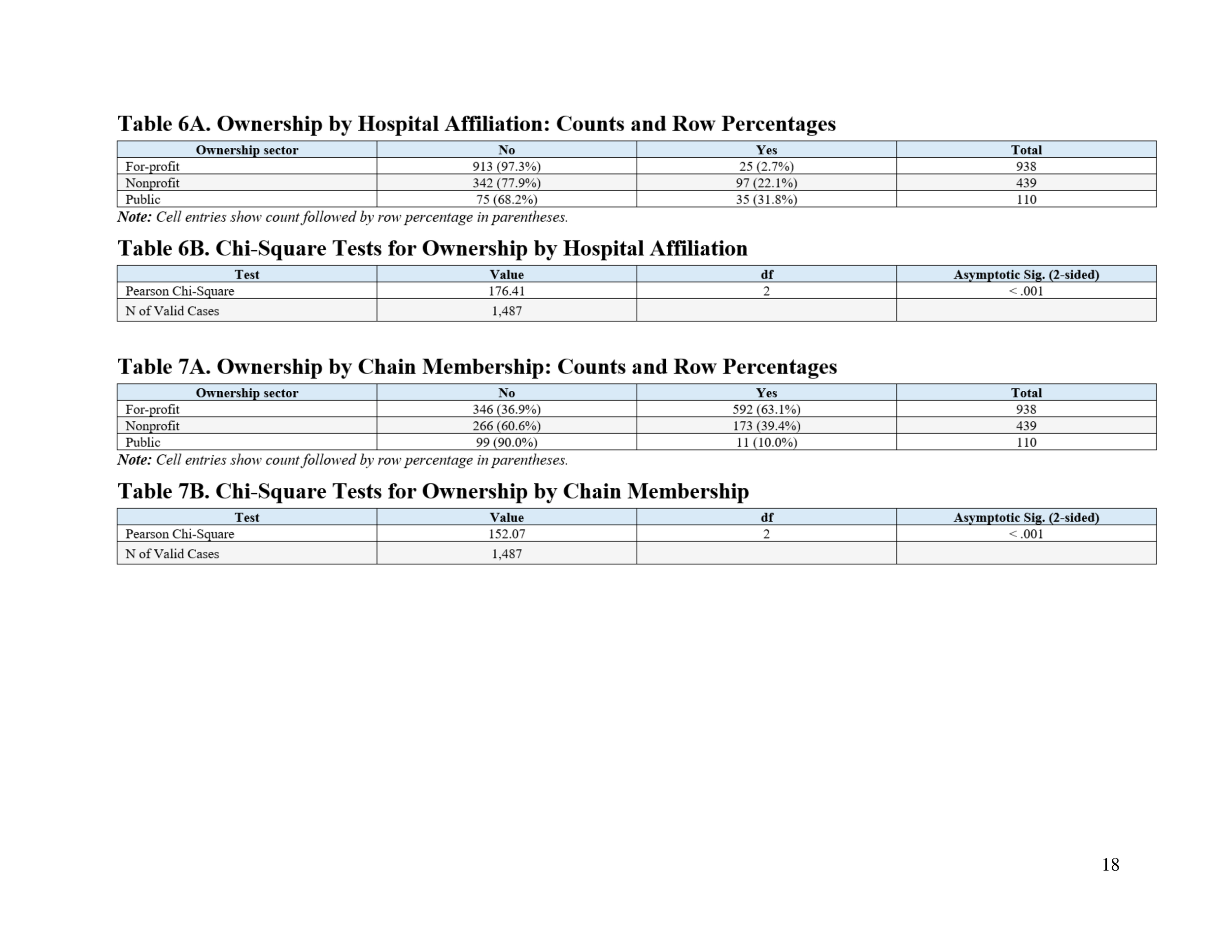
Chi-Square tests,
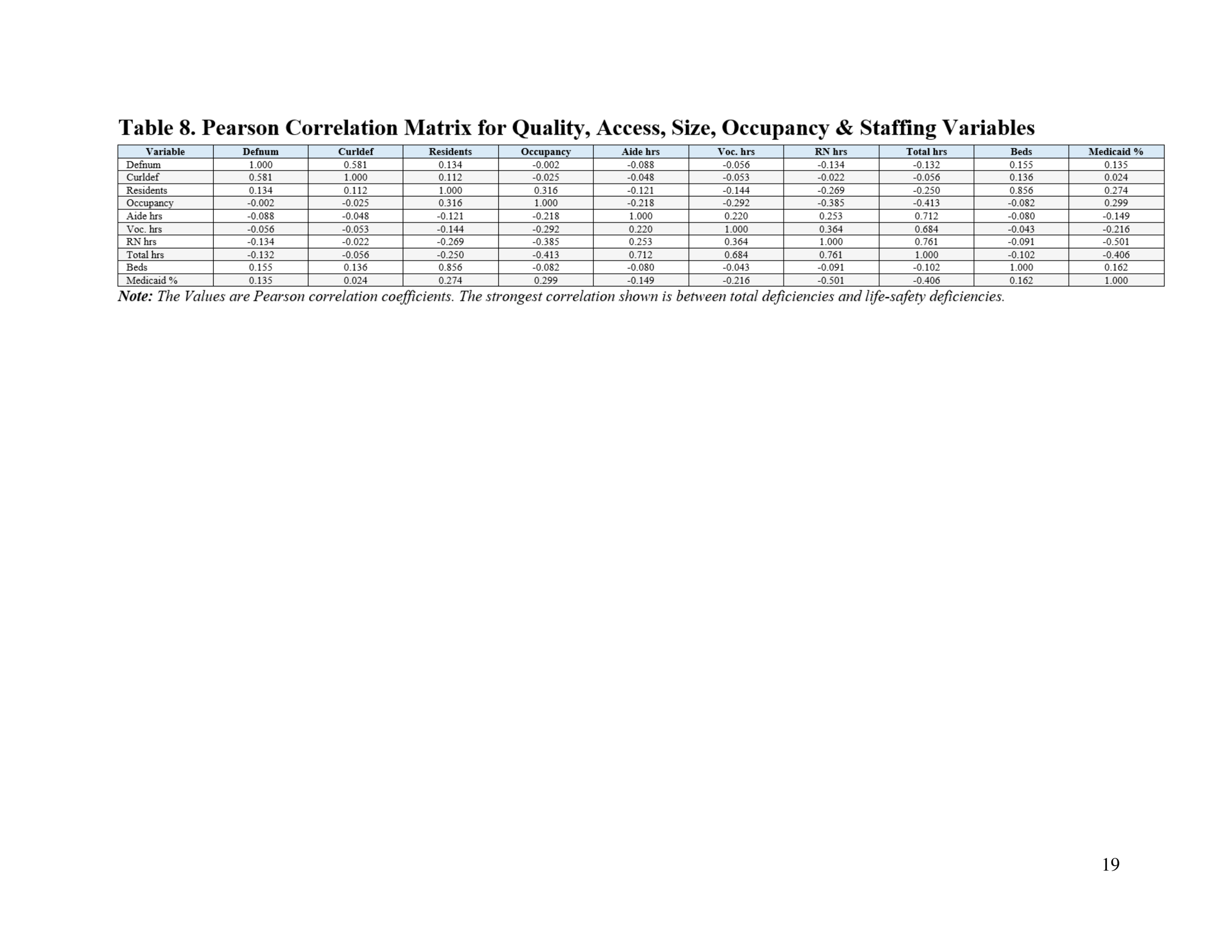
Correlation analysis,
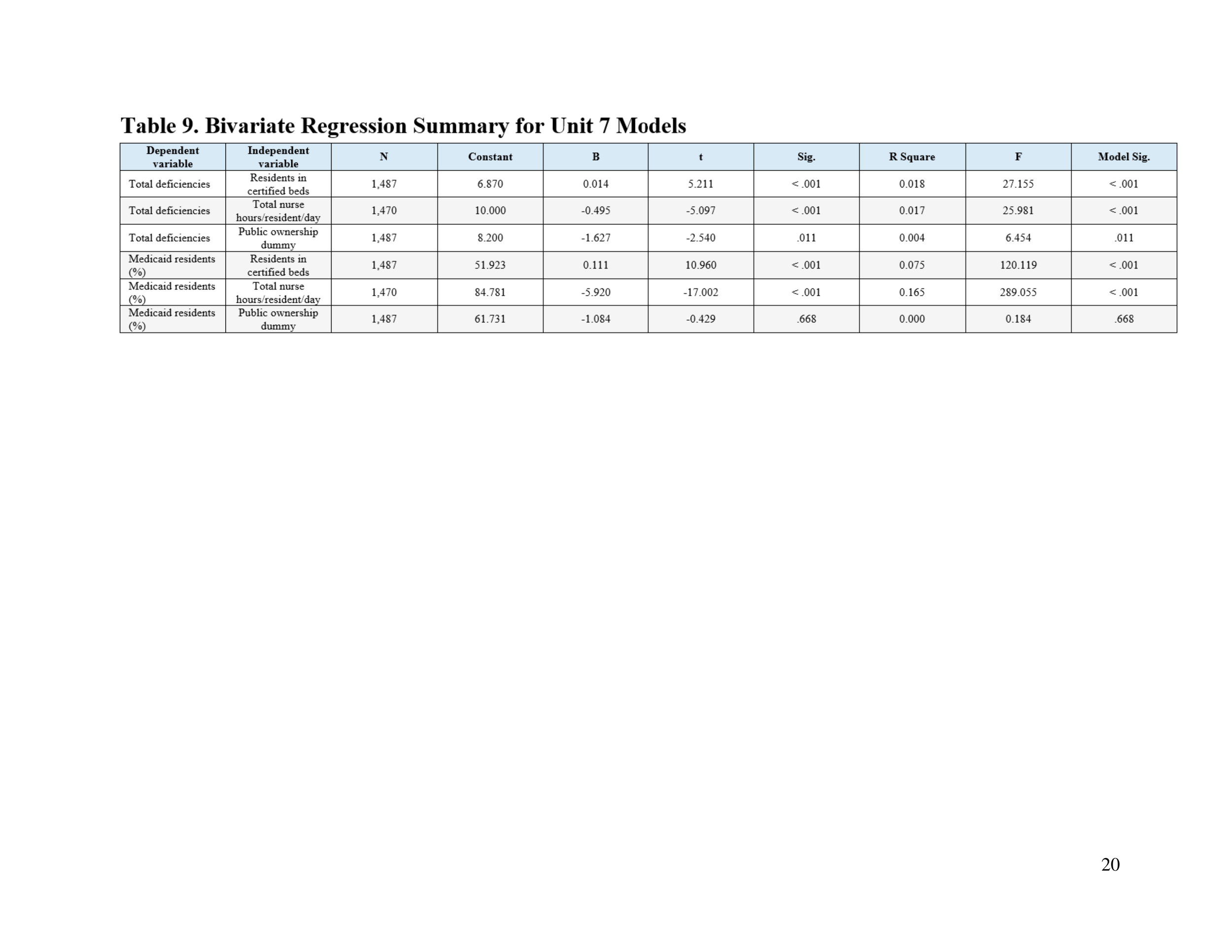
Bivariate regression,
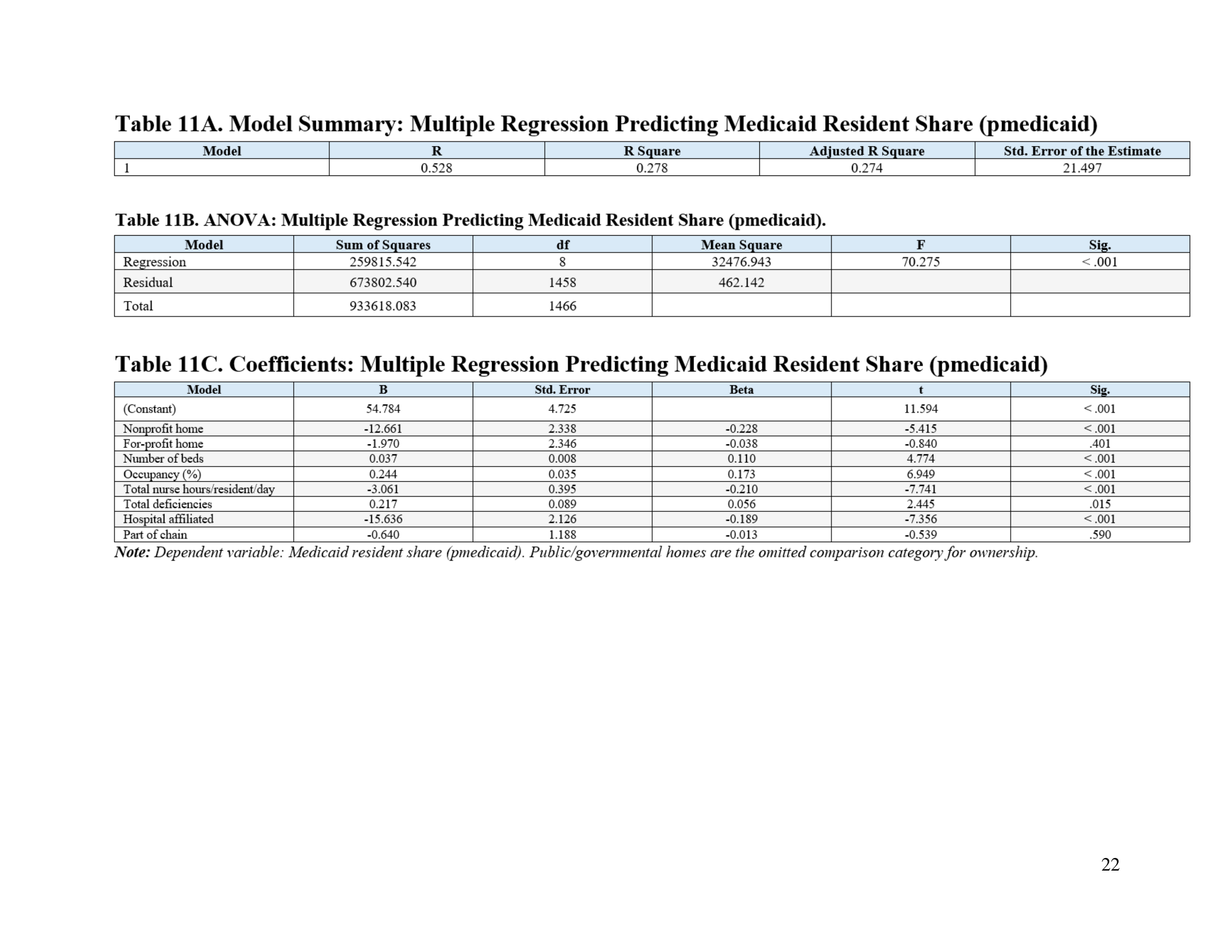
Multiple regression.
This approach allowed the project to move from descriptive comparison to more rigorous statistical testing while controlling for facility characteristics such as size, occupancy, staffing, hospital affiliation, chain membership, and Medicaid share.
Key Findings: Quality
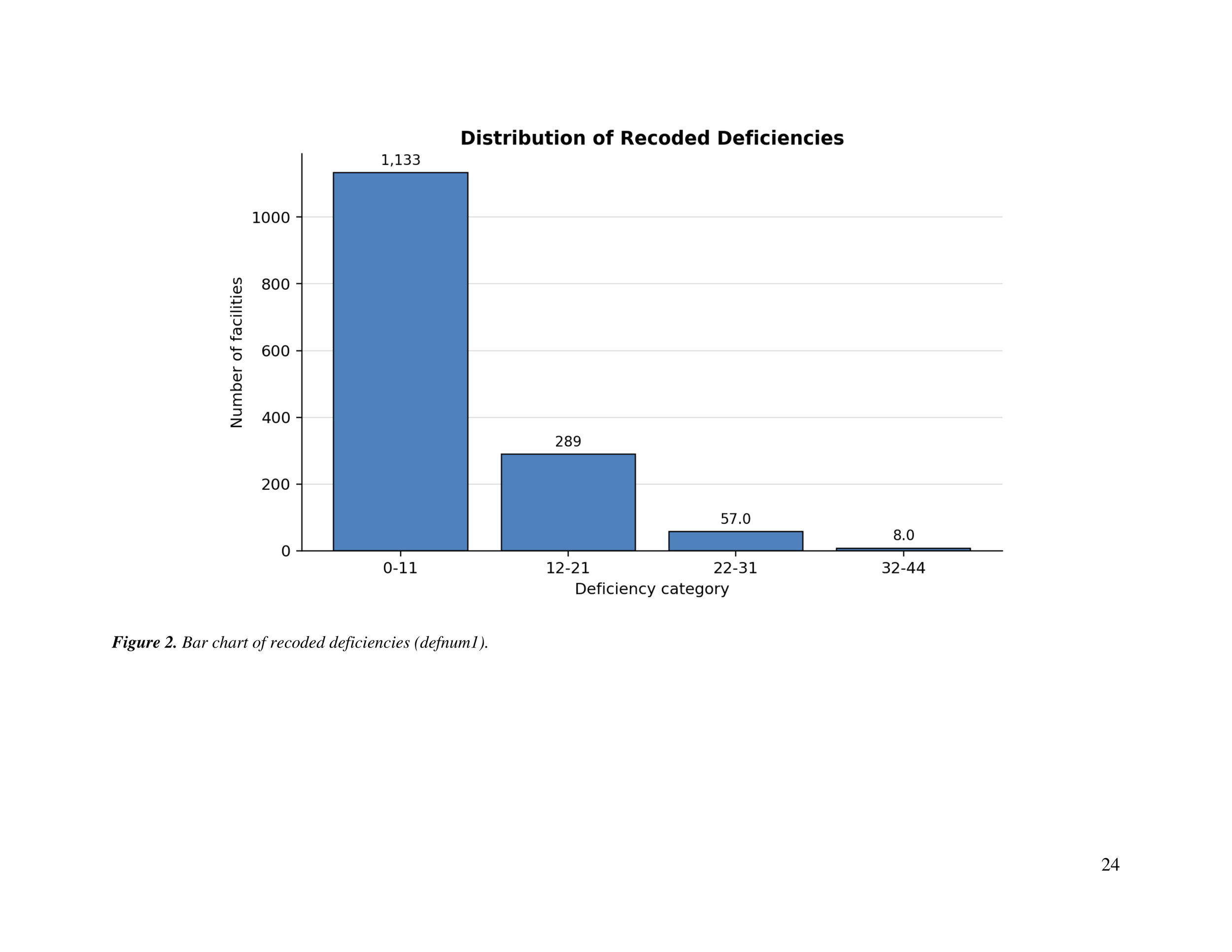
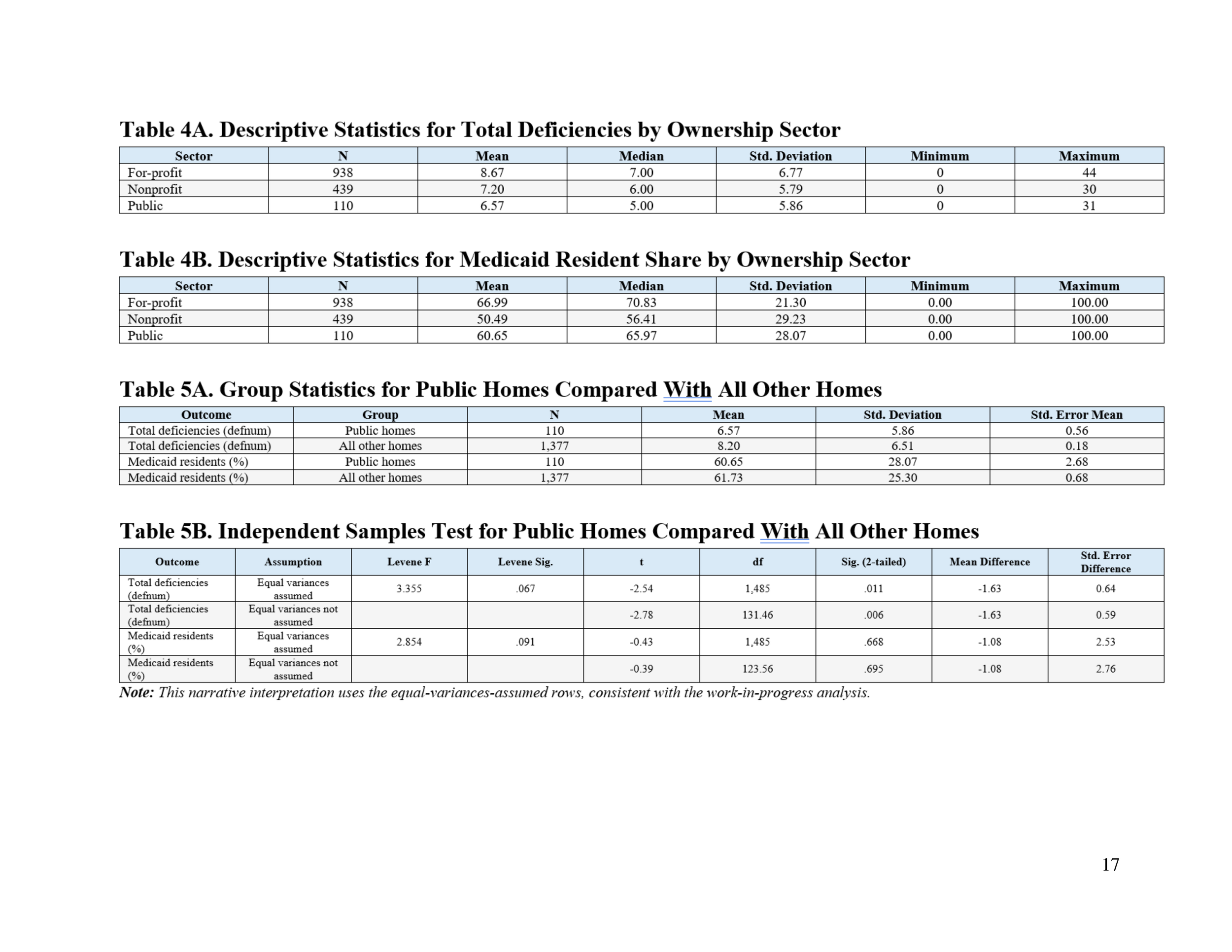
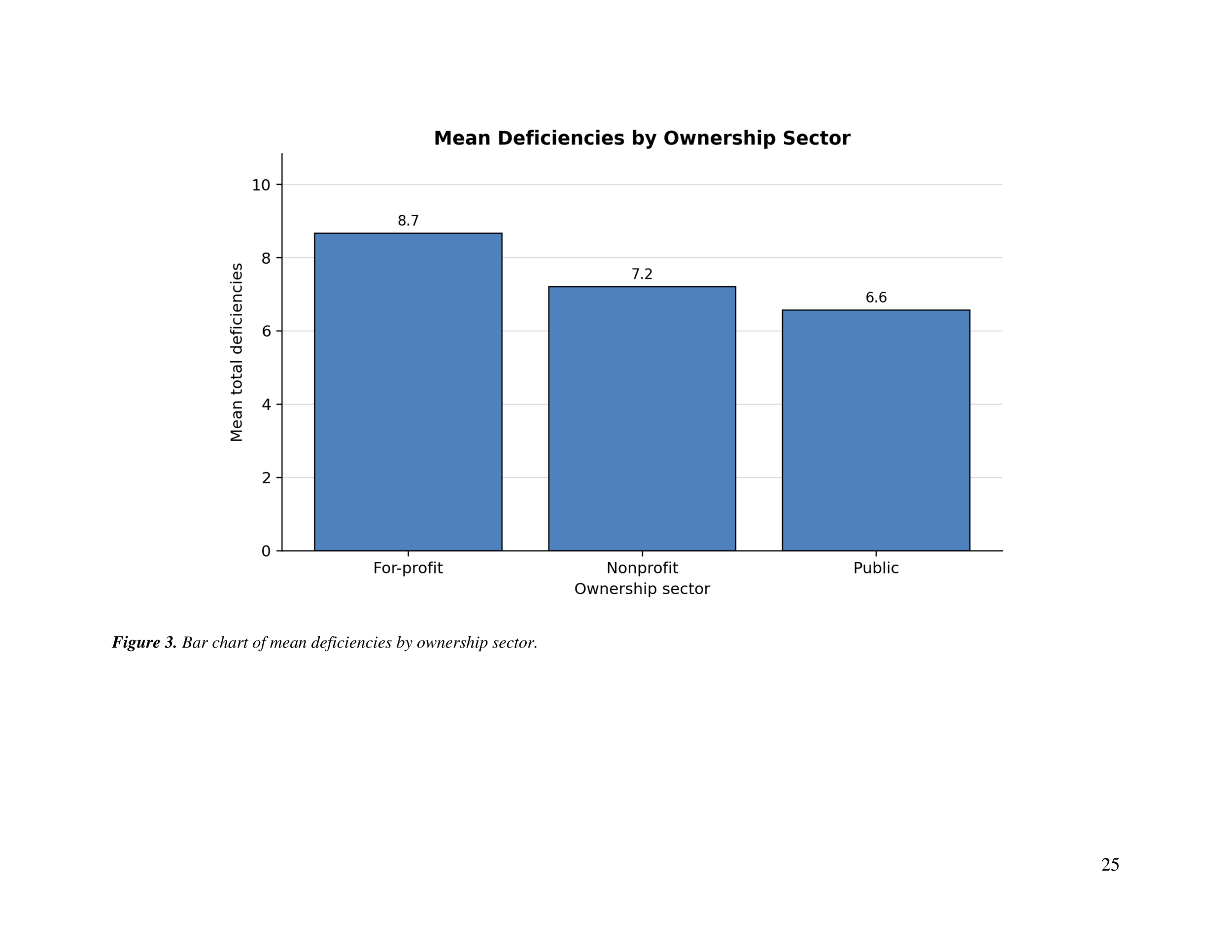
The analysis found that public/governmental homes had the lowest average number of deficiencies among the three ownership sectors. Public homes averaged 6.57 deficiencies, compared with 7.20 for nonprofit homes and 8.67 for for-profit homes. The chart on page 25 visually reinforces this finding by showing public homes with the lowest mean deficiency level.
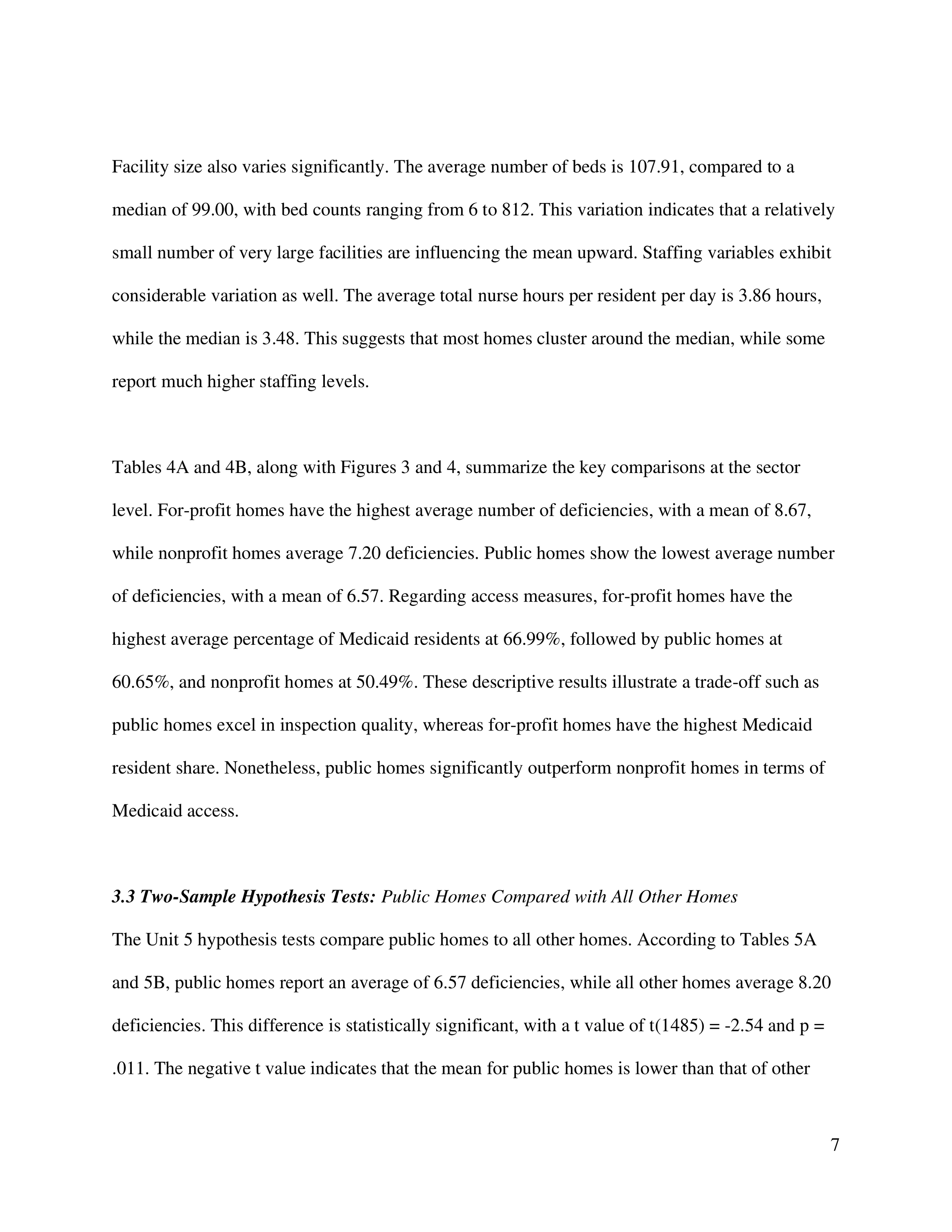
The two-sample hypothesis test also supported this quality advantage. Public homes averaged 6.57 deficiencies, while all other homes averaged 8.20, and the difference was statistically significant with p = .011.
Key Findings: Medicaid Access
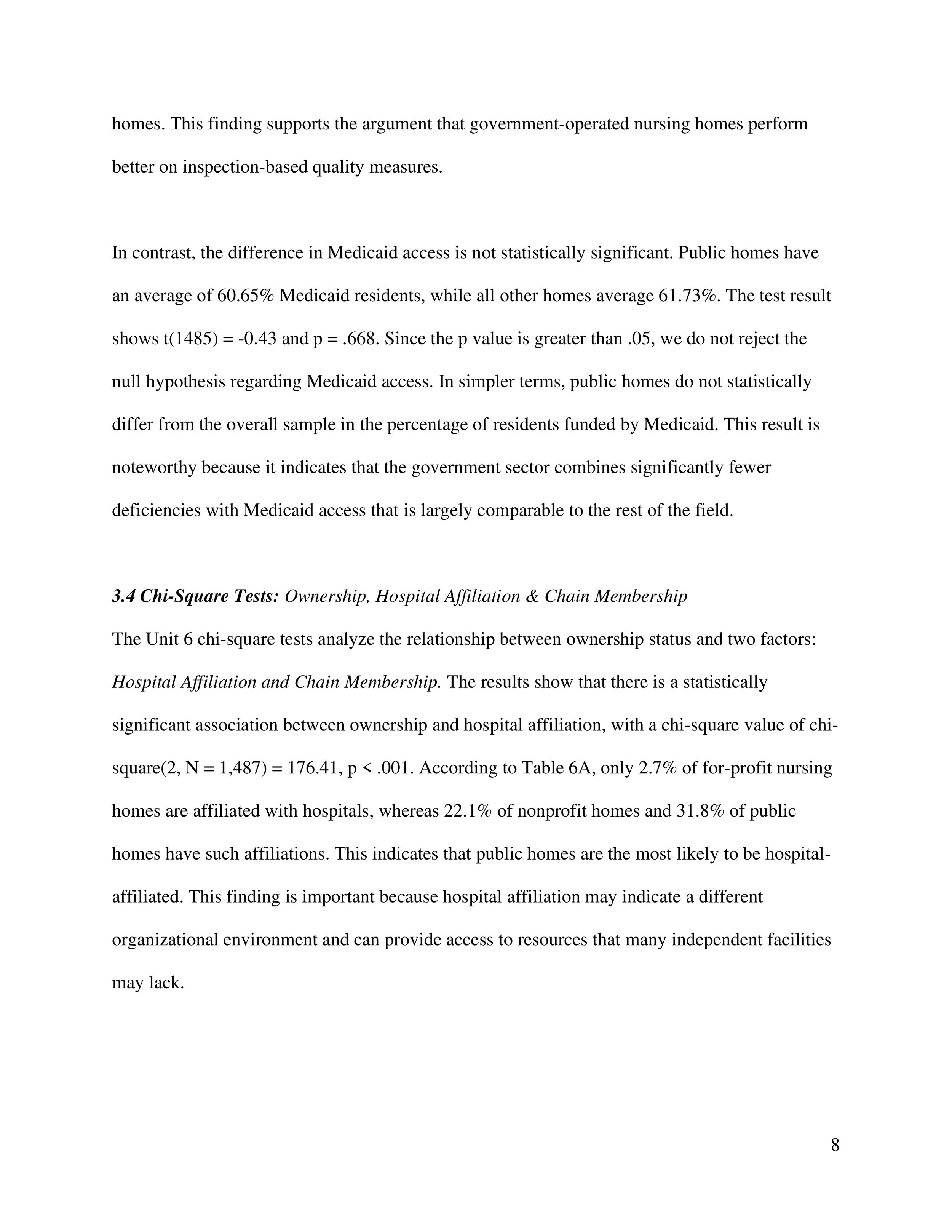
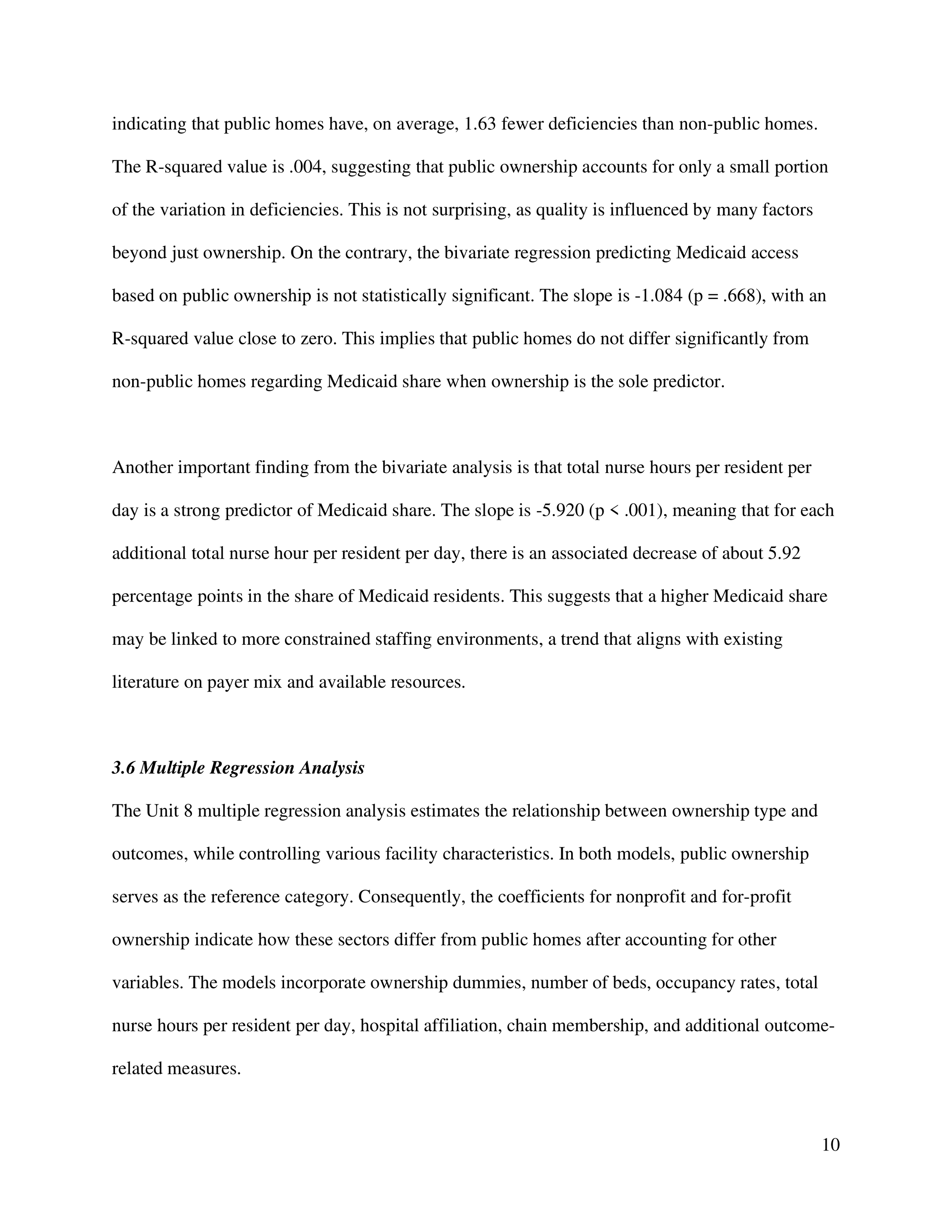
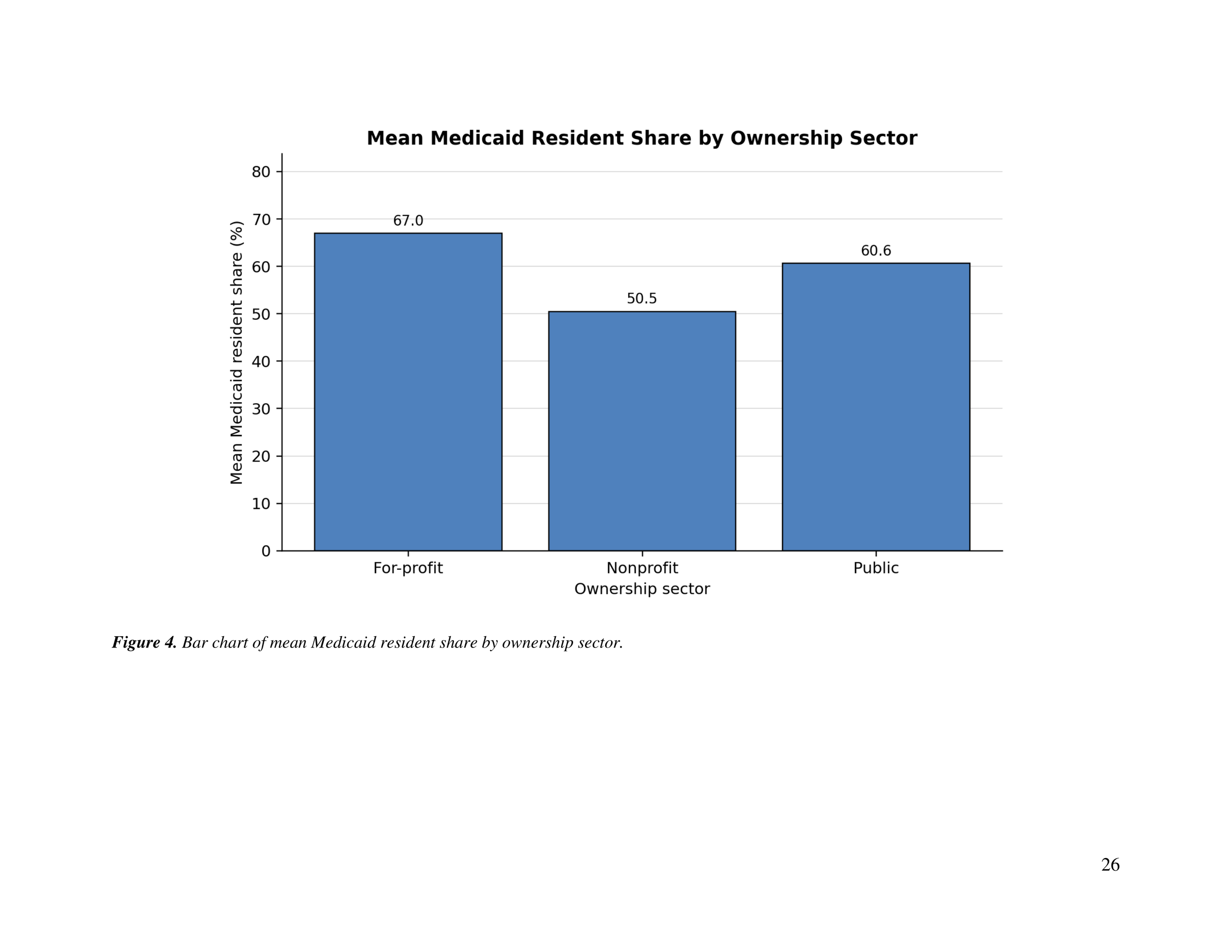
The access findings were more nuanced but still favorable to Memorial Senior Care. Public homes did not have the highest unadjusted Medicaid share; for-profit homes did. However, public homes maintained substantial Medicaid access, averaging 60.65% Medicaid residents, compared with 50.49% for nonprofit homes. The chart on page 26 shows this access comparison across ownership sectors.
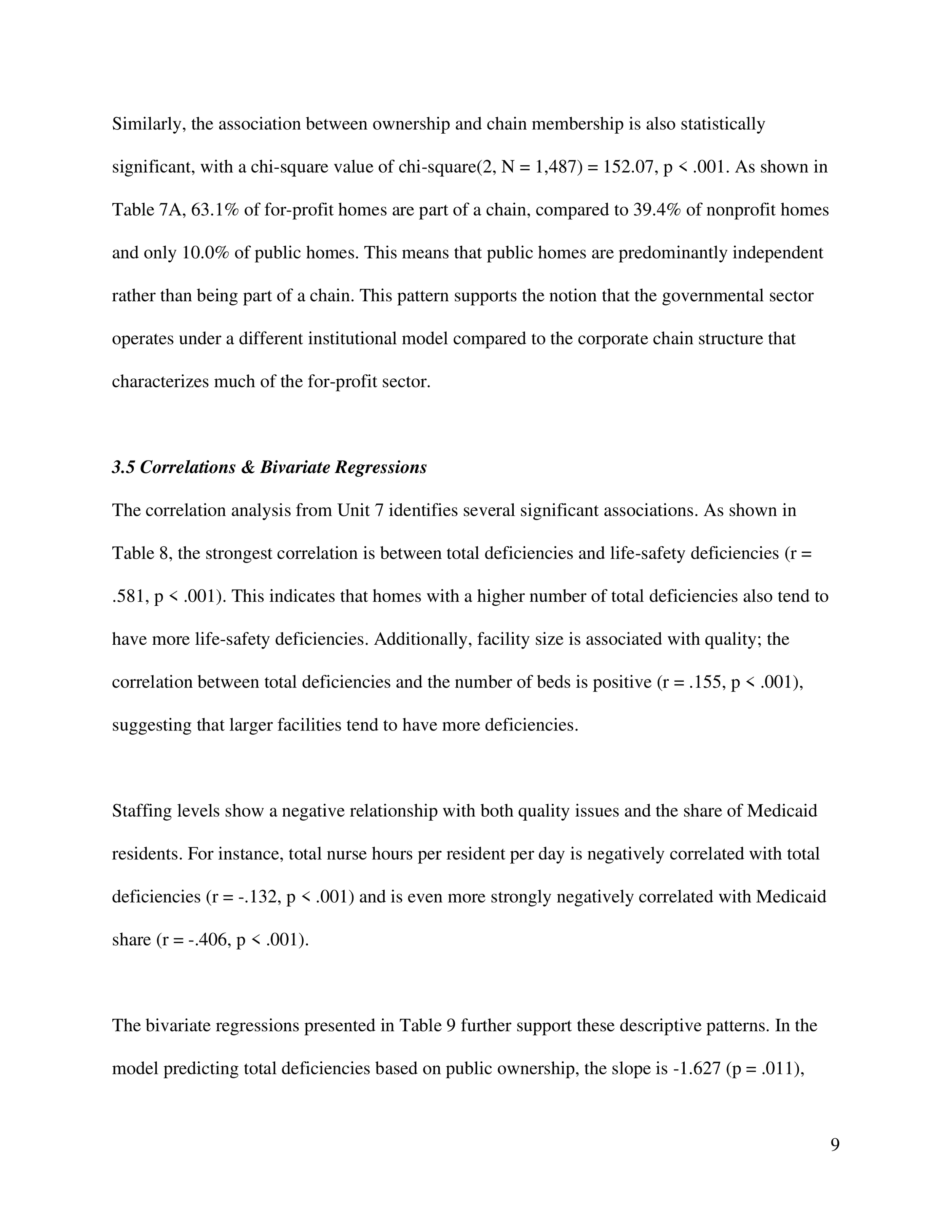
The report concluded that public homes combine stronger inspection performance with meaningful Medicaid access, which is central to the CMS grant decision.
Regression Evidence
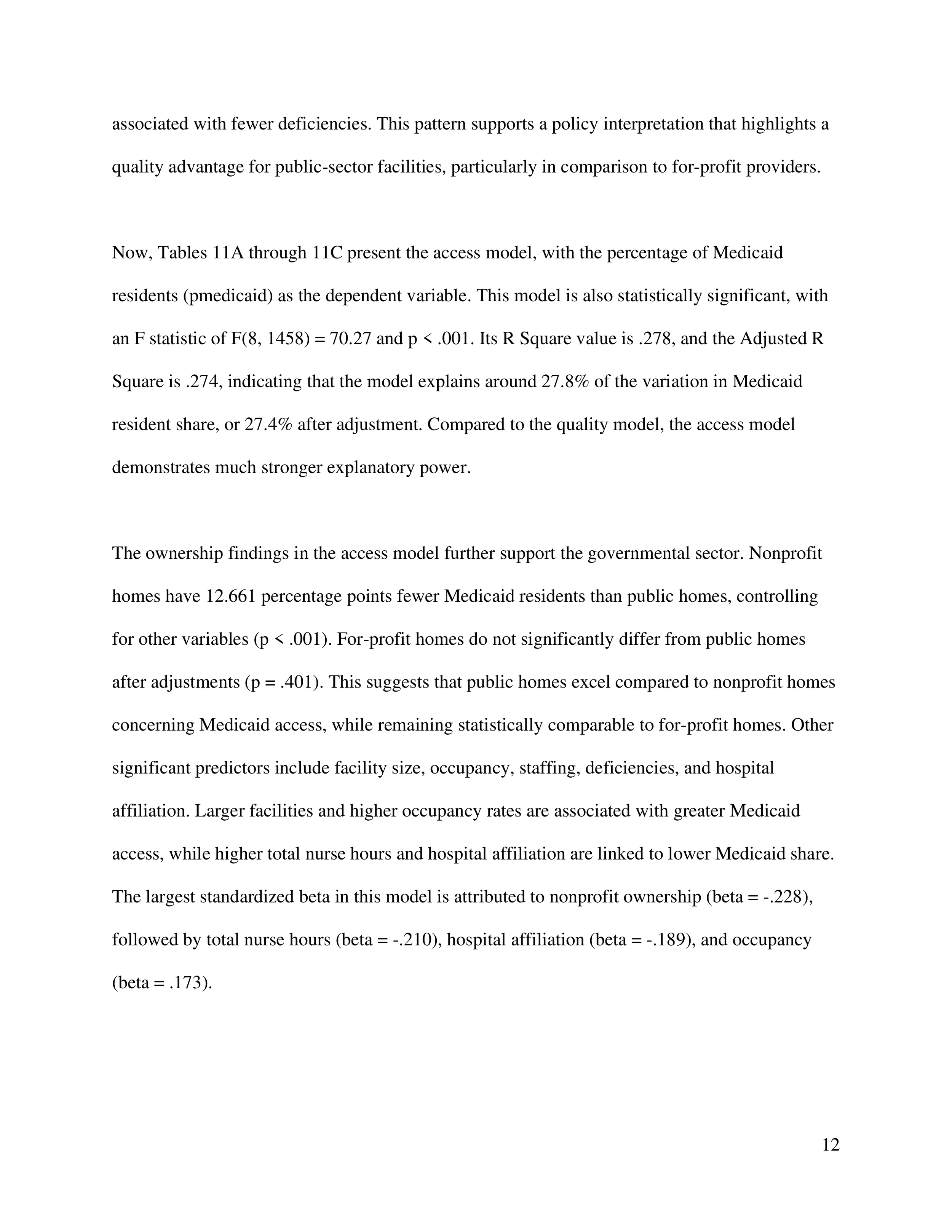
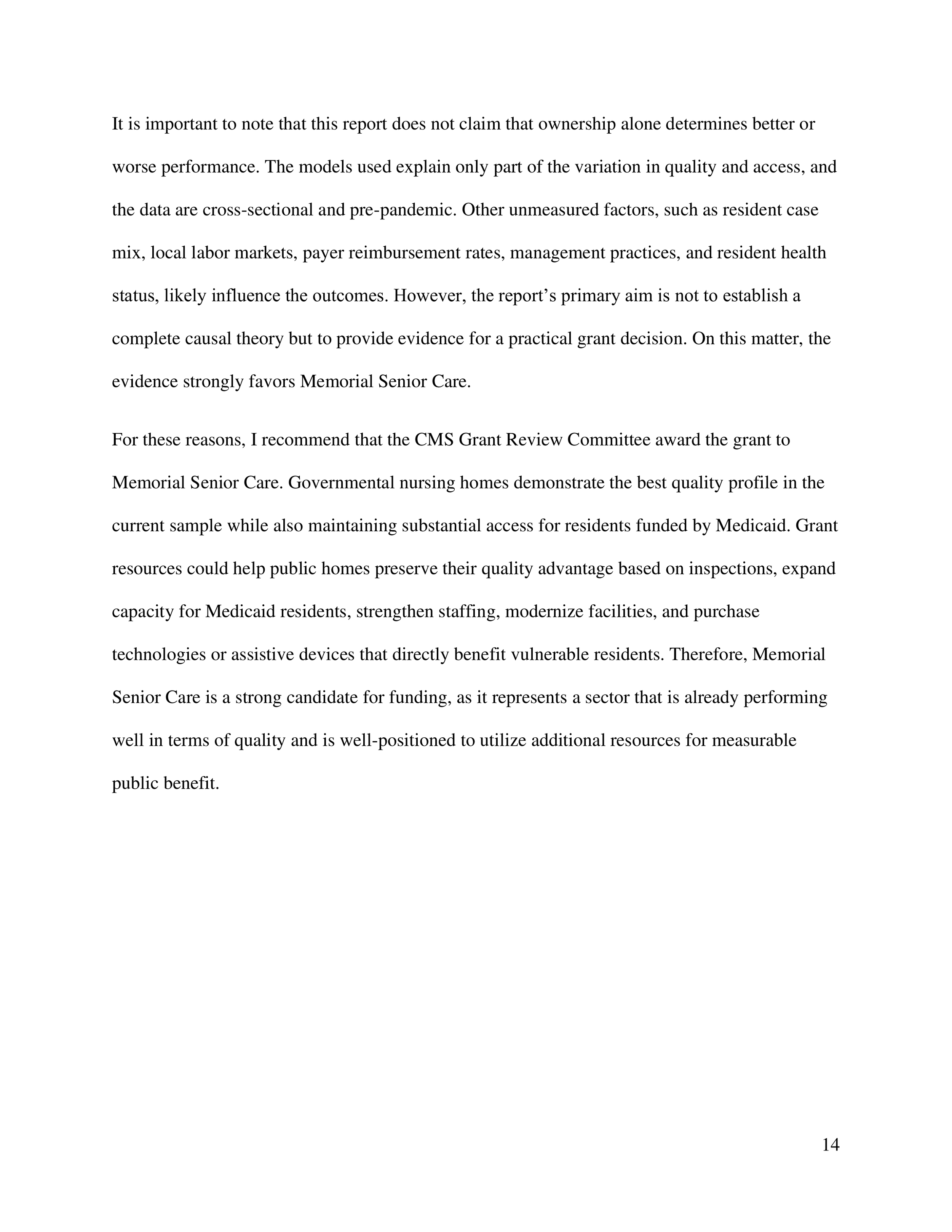
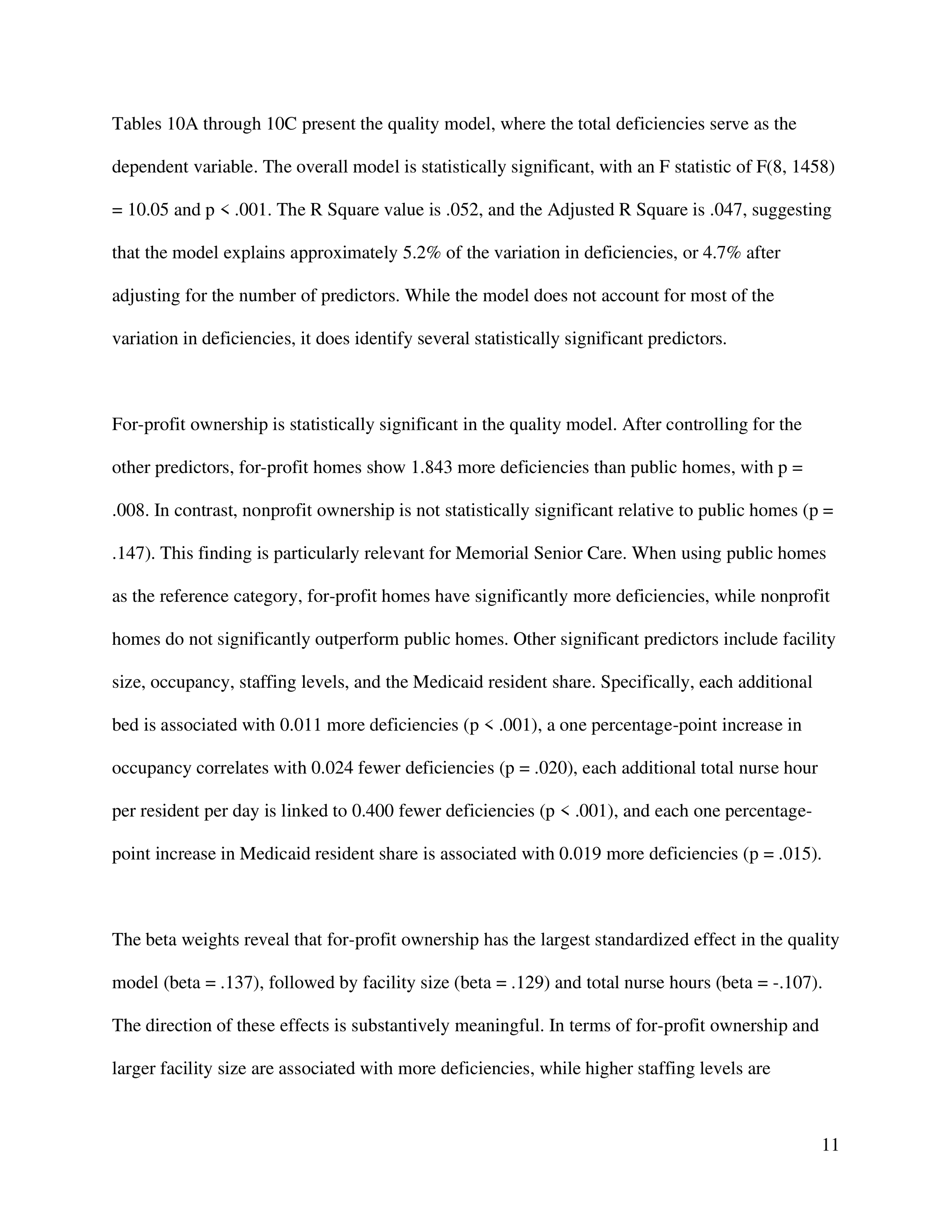
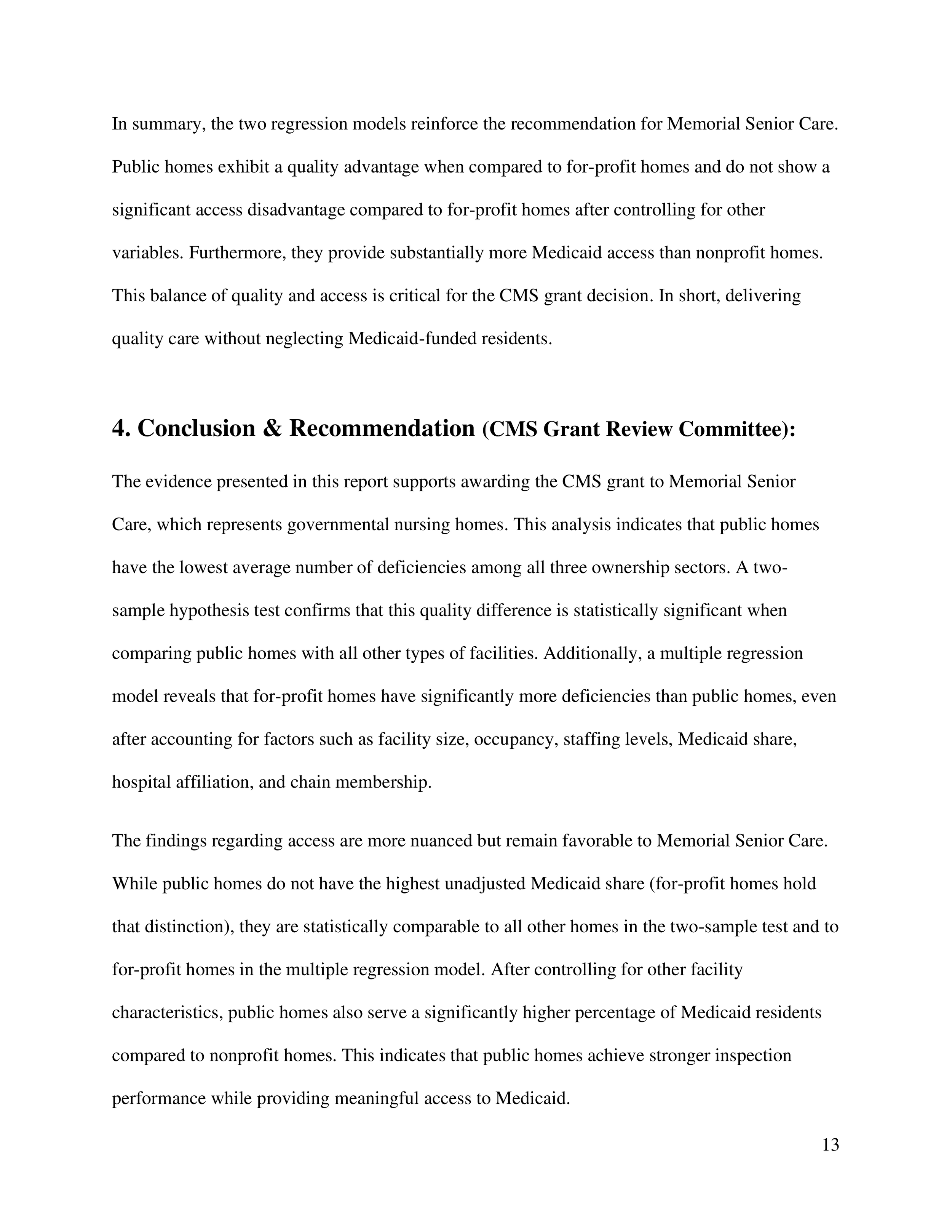
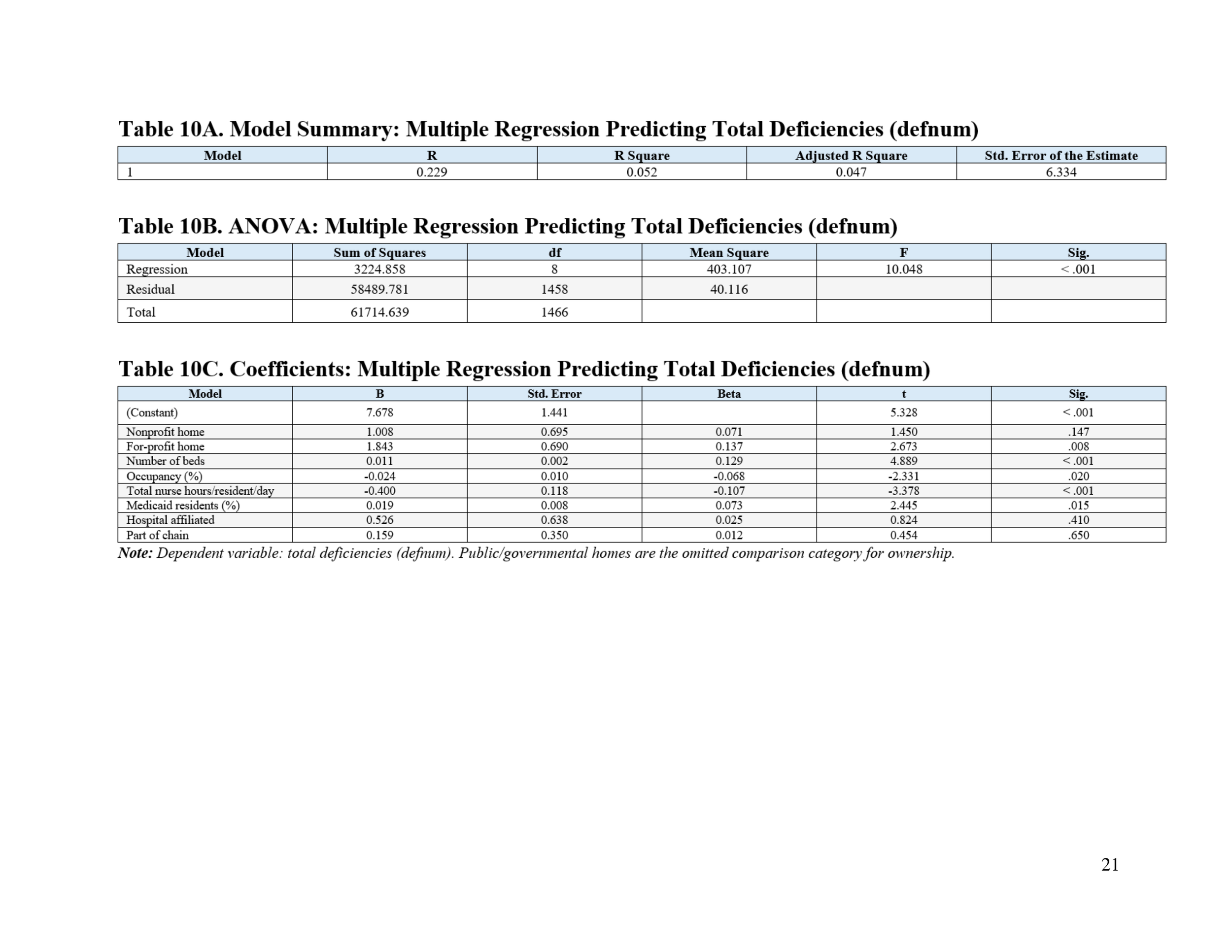
The multiple regression results strengthened the recommendation. In the quality model, for-profit homes had 1.843 more deficiencies than public homes after controlling for other facility characteristics, and this difference was statistically significant. In the Medicaid access model, nonprofit homes had 12.661 percentage points fewer Medicaid residents than public homes, while for-profit homes did not significantly differ from public homes after adjustment.
Together, the regression models supported the conclusion that public homes show a quality advantage compared with for-profit homes while maintaining meaningful access for Medicaid-funded residents.
Recommendation
The final recommendation was to award the CMS grant to Memorial Senior Care, representing governmental nursing homes. The report argued that governmental homes demonstrated the best quality profile in the sample while also maintaining substantial Medicaid access. Additional grant resources could help preserve the quality advantage, expand capacity for Medicaid residents, strengthen staffing, modernize facilities, and support technologies or assistive devices for vulnerable residents.
Why It Matters?
This project demonstrates the ability to use quantitative evidence to support a practical public-management decision. It shows how statistical analysis can inform funding decisions, especially when the policy question involves competing public values such as quality, access, equity, and accountability.
This project is especially strong for the website because it shows that you can move from data to interpretation to recommendation, not just produce tables, but explain what the results mean for institutional decision-making.
Professional Relevance
This work is directly relevant to public administration, health policy, nonprofit and governmental management, grant review, program evaluation, and evidence-based decision-making. It demonstrates applied competence in using data to compare organizational performance, assess public value, and make a defensible recommendation to a funding body.
Key Demonstrated:
Quantitative analysis
Descriptive statistics
Hypothesis testing
Chi-square analysis
Correlation and regression analysis
SPSS-style output interpretation
Evidence-based recommendation writing
Public-sector data interpretation
Personal Reflection:
This project reflects my graduate training in quantitative methods, and my broader interest in using data to support public decisions that balance quality, access, equity, and measurable public benefit.